
There are some recipes that are never written down.
They live in the hands.
In the way a grandmother reaches for the salt without measuring. In the way she knows when a dish has enough olive oil. In the way she opens the oven, leans forward and decides something is ready not because a timer has gone off, but because it smells right.
That was how Lili cooked.
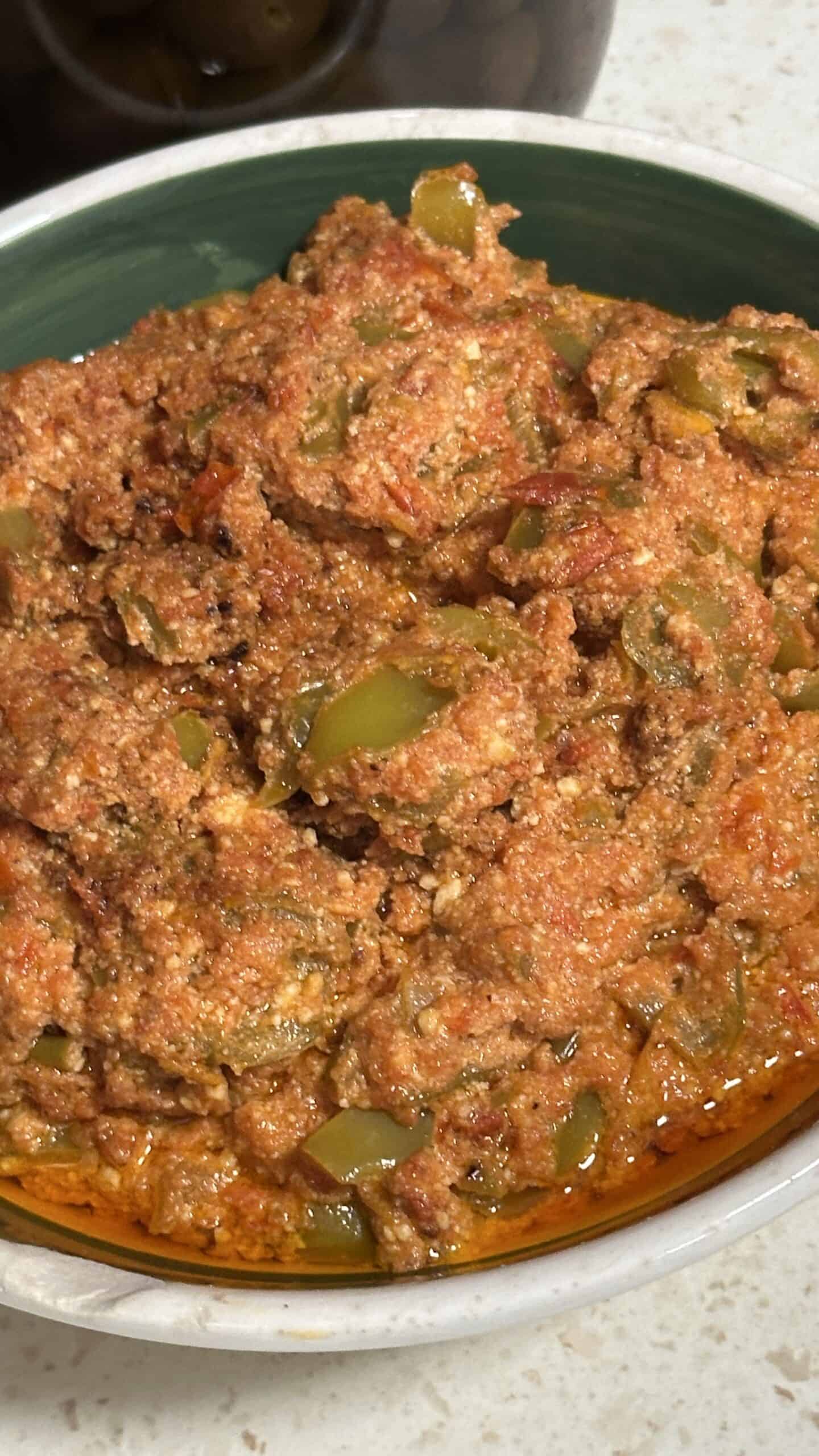
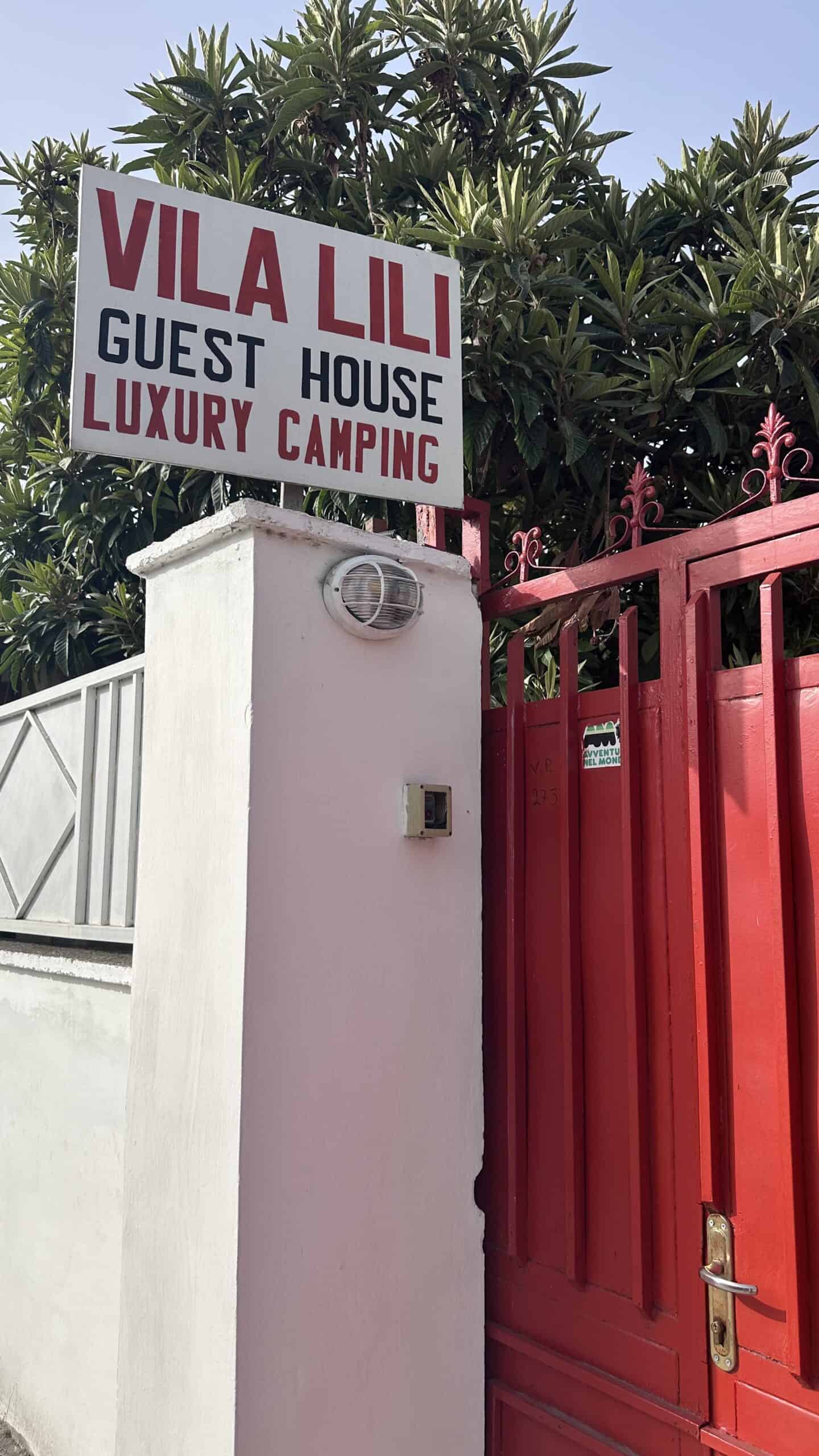
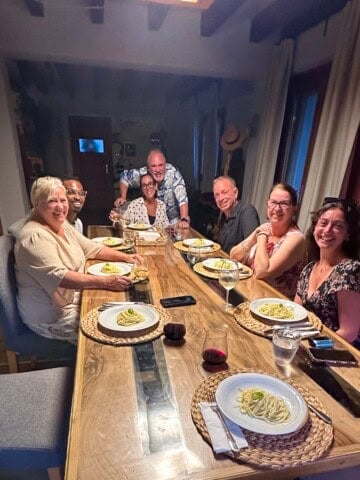
I had already suspected as much the evening we arrived at her guesthouse in Berat, Albania. Before we had properly settled in, she brought out a pan of fërgesë, still warm, with bread for scooping up every last bit. Then came a bottle of the family's homemade red wine, smooth and unlabeled, the kind of wine that tells you immediately it was never intended for a shop shelf.
It was made for a table.
For family.
For guests who would very quickly be treated like family.
The next afternoon, I joined Lili in her kitchen.
Her fourteen-year-old granddaughter, Anjel, was there too, translating, explaining, teasing her grandmother and somehow keeping up with the constant movement of a woman who seemed incapable of making only one dish.
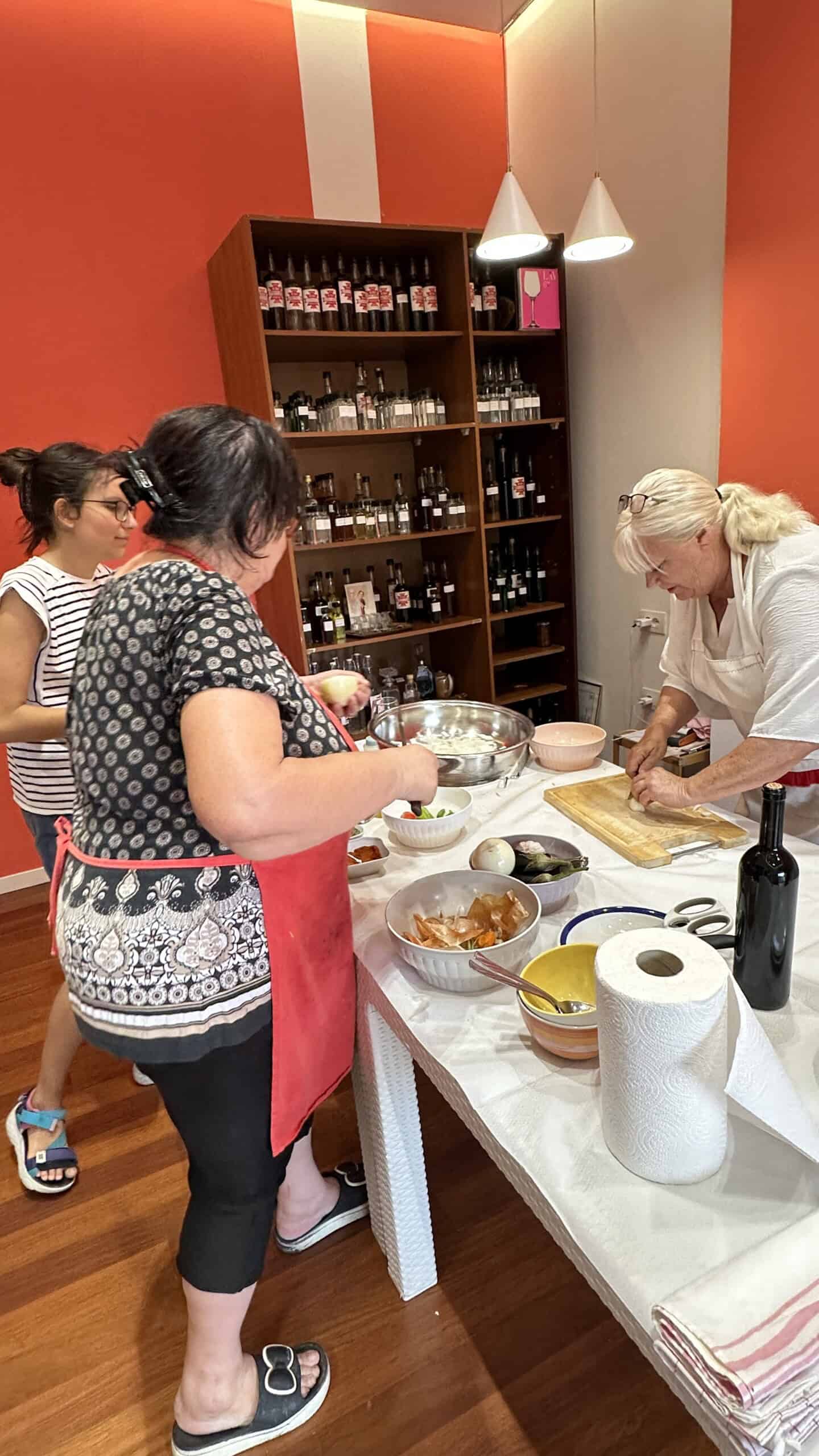
One salad became another. Vegetables were chopped and fried. Meatballs were mixed by hand. Herbs appeared from the garden. Yogurt, walnuts, apples, cucumbers, sour cream, peppers, potatoes.
Every time I thought we must surely be finished, Lili started something else.
Anjel laughed. This was simply what her grandmother did.
Lili moved through the kitchen without hesitation.
I, on the other hand, had questions.
How much salt?
How much paprika?
How long should this cook?
The answers were not always answers in the way I expected.
A little.
Enough.
Look at it.
Smell it.
Anjel understood exactly what I was experiencing. When she asked her grandmother how to make something, the answers were much the same.
There was laughter in the telling, but underneath it was something I recognized.
One day, someone would have to know what "a little" looked like. Someone would need to recognize the right texture beneath their fingertips and the smell that meant it was time to take a dish from the oven.
Growing Up in Our Grandmother's Hands
At one point, Anjel began talking about grandmothers.
For her, she explained, grandmothers are an important part of Albanian tradition and culture because so much is passed down through them.
Food. Customs. Family traditions.
The little things children grow up seeing so often that they barely notice them.
Then she said something I have thought about ever since.
"We grew up in our grandma's hands."
There could hardly be a better description of what I was watching.
Anjel knew how her grandmother cooked, how she showed affection, which foods appeared at New Year and what her family did when they gathered around the table.
She knew because she had grown up inside those traditions.
Not from a lesson or a book, but from watching, helping and being handed tastes straight from the pan.
And Lili's love language was unmistakable.
Eat.
Try this.
Have more.
No, more.
Even when the table was overflowing and we were certain we could not manage another bite, Lili continued cooking.
I learned quickly that protesting was pointless.
The Food That Belongs to Memory
We returned to Lili's kitchen the following afternoon for round two.
This time, she was preparing one of her favorite traditional dishes, përshesh, a special-occasion meal made with bread and roasted meat.
The bread had been made the day before and left to become firm. Together, we broke it into small pieces while Anjel explained that this was traditionally a family activity, especially at Christmas and New Year.
Everyone gathers around, tearing bread, talking and drinking wine.
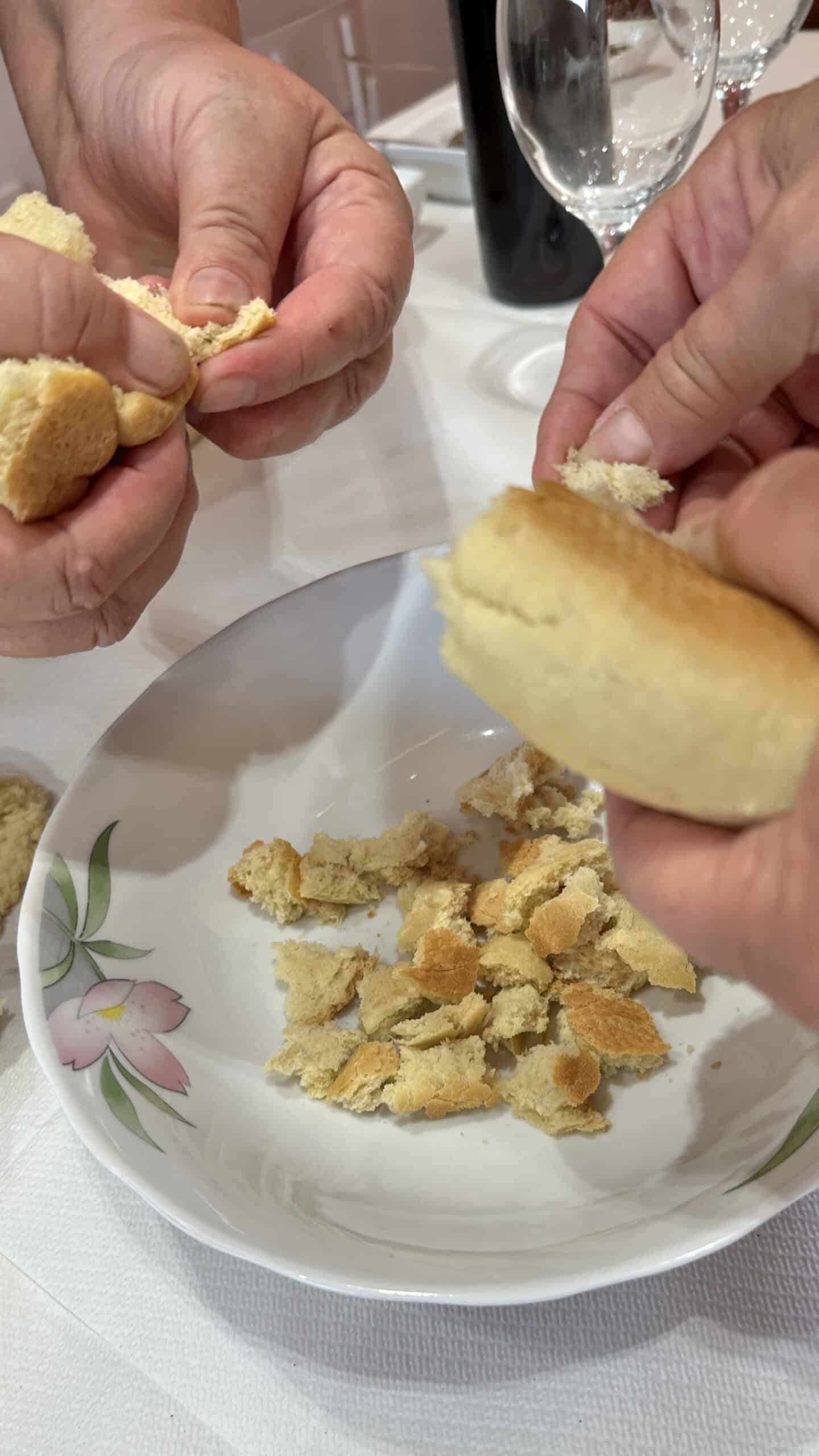
She shared an old family saying from her great-grandfather:
"Two in the air, one in the mouth."
Apparently, not all the bread was expected to make it into the pan!
Lili melted butter until it began to brown, then added the bread, stirring until the pieces turned golden. Finally came the rich juices from the lamb she had roasted earlier.
As the aroma rose from the pan, I watched Anjel's expression change.
"Oh my God," she said, breathing it in.
This was a dish her family might enjoy only once a year. She had been waiting for that familiar smell, and I could see how much it meant to her.
It reminded me of how certain foods become inseparable from our memories. A smell can transport us straight back to childhood, to a holiday table, or to someone we love.
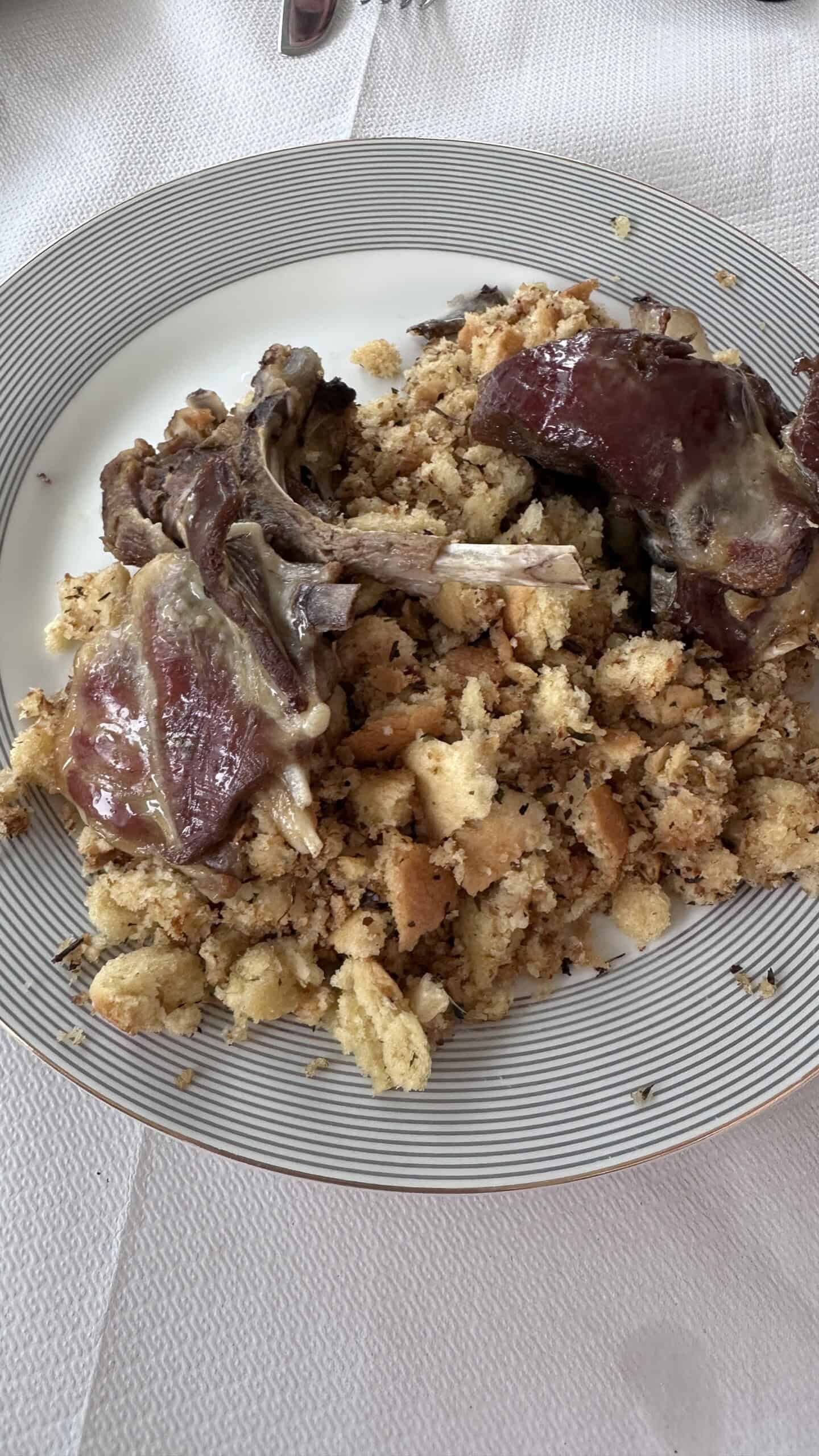
Anjel also told us about other traditional dishes served during family celebrations, including japrak, stuffed grape leaves, and tavë kosi, lamb baked with yogurt and rice.
But it was the përshesh that seemed to hold a particularly special place in her heart.
Maybe You Should Write It Down
Watching Lili and Anjel together brought back memories of my own grandmother, who made the most extraordinary pies.
She never measured anything either. Her hands simply knew how the dough should feel.
I have tried many times to recreate her pie crust. I've come close, but it has never been quite the same.
I told Anjel how much I wished I had written down more of those little details while my grandmother was alive.
Then I suggested something.
"Why don't you make a family cookbook?"
She could collect favorite recipes from both grandmothers, along with the dishes her parents and grandfather loved. It could become something she shared with the family, perhaps as a Christmas gift.
Anjel liked the idea.
And I loved imagining her years from now, opening that collection and remembering these afternoons with Lili.
The Woman Who Never Stops
The more time we spent with Anjel, the more we learned about Lili.
She had grown up in Berat's historic Mangalem neighborhood. After living in Kuçovë with her husband, Vanja, they eventually returned to Berat and opened their guesthouse in 2014.
Vanja, a retired mechanical engineer, helps with the many things that keep the property running, while Lili seems to command the kitchen.
And what a kitchen it is.
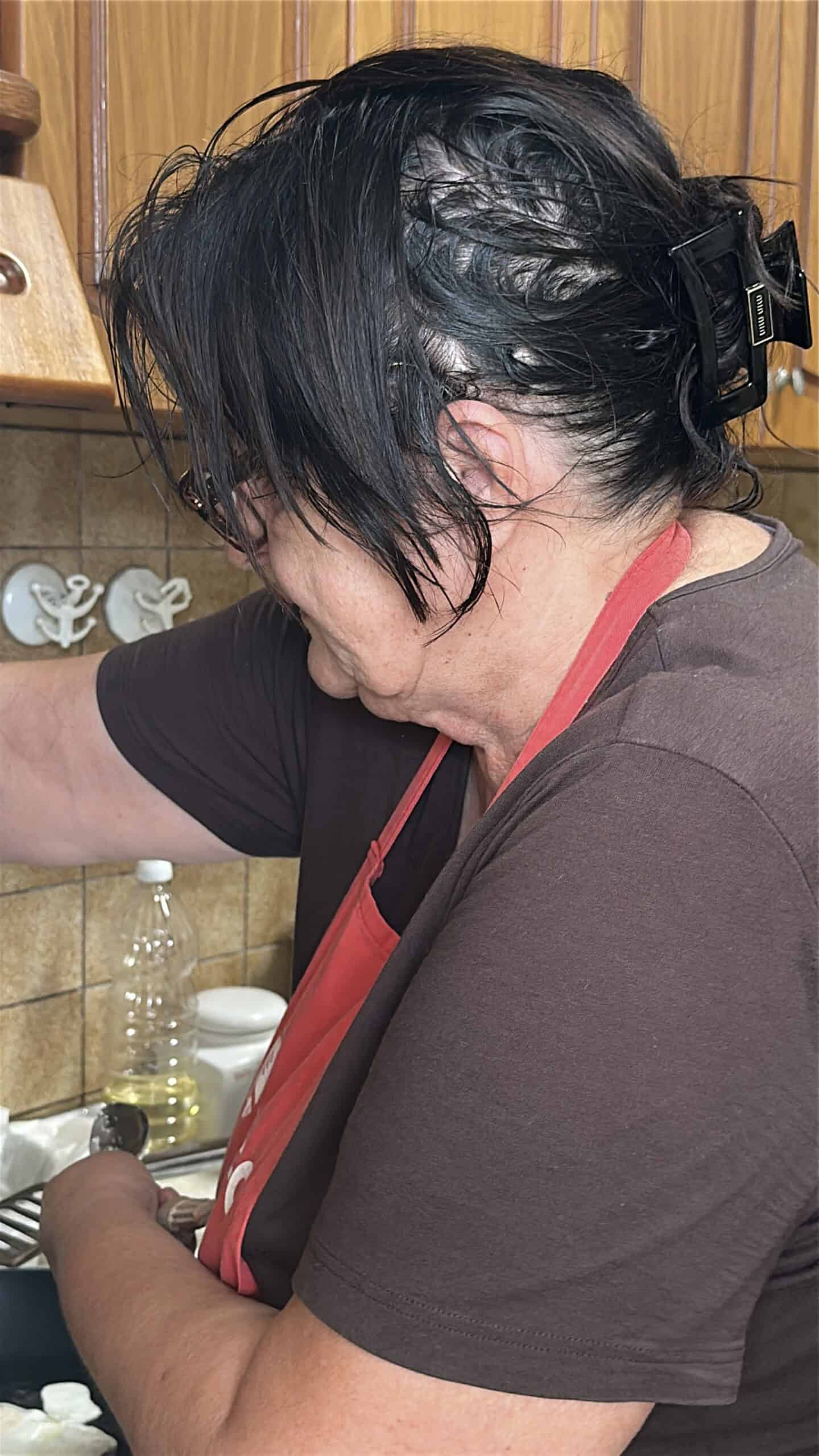
Lili rises incredibly early, works late and somehow finds the energy to cook enormous meals for her guests. Even after an injury that should have kept her resting, her family struggled to keep her still.
I asked Anjel what her grandmother did to relax.
"She doesn't relax, honestly," she replied.
Then she explained that Lili considers the kitchen her relaxation.
When I asked what motivated her, Anjel said her grandmother did the work "by heart." She genuinely loved cooking and welcoming people.
I understood completely.
Lili was happiest when she was giving. Another plate of food, another glass of wine, something extra to take with us.
Eventually, I realized that accepting the food was simply accepting her love.
When the Grapes Are Ready
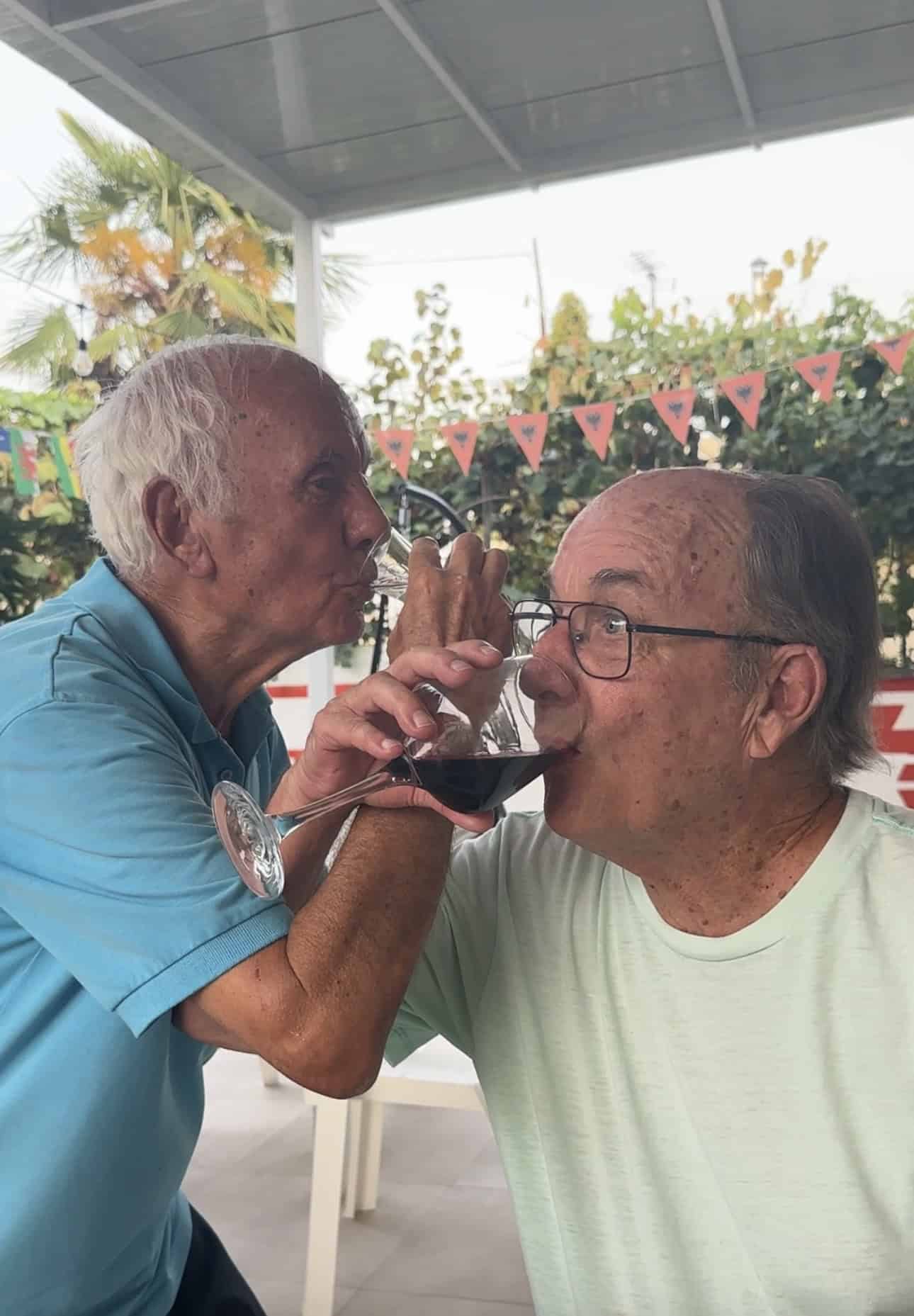
One of the family's most cherished traditions is making their own wine each year.
Anjel explained that the date is never fixed. Everything depends on when the grapes ripen.
"It's not in our hands. It depends on Mother Nature."
When the grapes are ready, the family comes together.
They make hundreds of bottles, primarily for family and guests, and their wine had no label.
Dan thought that made it especially memorable. After seeing so many elaborate wine labels during our travels, this simple, unlabeled bottle stood out.
Anjel told us she was designing a label herself but wanted it to be special.
"Nice things take time," she said.
She also explained how, at family gatherings, the oldest person traditionally raises a glass of wine or raki and offers a toast wishing everyone health, prosperity, happiness and gratitude.
I loved the simplicity of it.
Before we left, Lili insisted on giving us some wine to take along.
"When you miss Albania," Anjel told us, "just remember this by tasting this wine and something from Berat."
We promised to save it for a special occasion.
Becoming the Keeper
Near the end of our second afternoon, I told Anjel I was writing a story about her and Lili.
Her response was beautiful.
She explained that without her grandmother's passion for cooking and welcoming people, none of us would have been sitting there together.
"So thanks to Lili," she said.
I realized then that Anjel had spent two afternoons doing far more than translating Albanian into English.
She had shared the meaning behind her family's traditions.
Why everyone gathers to tear the bread.
Why her grandmother saves the neck of the lamb especially for her.
Why the family waits patiently for the grapes to ripen.
And why Lili keeps feeding people long after they insist they are full.
Anjel is already preserving these memories simply by knowing their stories and sharing them.
Perhaps one day she really will make that family cookbook.
She may write down the flour, butter, salt and lamb. She might even figure out exactly how much Lili means by a pinch.
But I hope she includes the other things too.
The bread shared around the family table.
The first spoonful saved for the child.
The wine poured with wishes for health and happiness.
And the grandmother who never stopped cooking because feeding people was how she showed her love.
One day, when someone asks Anjel how long a dish should stay in the oven, I imagine she will smile and answer just as Lili did.
"You'll know when it smells right."
And what once lived in her grandmother's hands will live in hers.
Continue Your Culinary Journey Through Albania
My time in Lili’s kitchen was a beautiful reminder that food is so much more than what we put on our plates. It is our history, our heritage and a way of keeping the people who came before us close to our hearts.
To discover more about this fascinating country, join me on Our Journey to Albania, where I share its history, culture, traditional cuisine and recipes you can recreate in your own kitchen.
This story is part of Gathered — Stories, recipes and traditions from around the world’s tables, celebrating the people who keep our culinary heritage alive, one generation at a time.
Leave a Reply