
International Cuisine

  • Home
  • About Me
    • Privacy Policy
  • Journey by Country
  • Recipes
  • Travel
  • My Cookbook
  • Exploring the World Through Food
  • Gathered
menu icon
go to homepage
  • Home
  • About Me
    • Privacy Policy
  • Journey by Country
  • Recipes
  • Travel
  • My Cookbook
  • Exploring the World Through Food
  • Gathered
  • Connect with us

    • Instagram
    • Pinterest
  • search icon
    Homepage link
    • Home
    • About Me
      • Privacy Policy
    • Journey by Country
    • Recipes
    • Travel
    • My Cookbook
    • Exploring the World Through Food
    • Gathered
  • Connect with us

    • Instagram
    • Pinterest
  • ×
    Home » Recipes

    Matoke (Ugandan Banana Stew)

    • Facebook
    • Twitter
    Jump to Recipe  ↓ Print Recipe  ❒
    Traditional Ugandan Matoke banana and peanut stew served in a black bowl, garnished with fresh herbs, with plantains and ingredients in the background.

    Matoke is one of Uganda’s most beloved traditional dishes, made from green cooking bananas slowly simmered until tender and often combined with a rich peanut sauce, vegetables, or meat. It is hearty, comforting, and represents the heart of Ugandan home cooking.
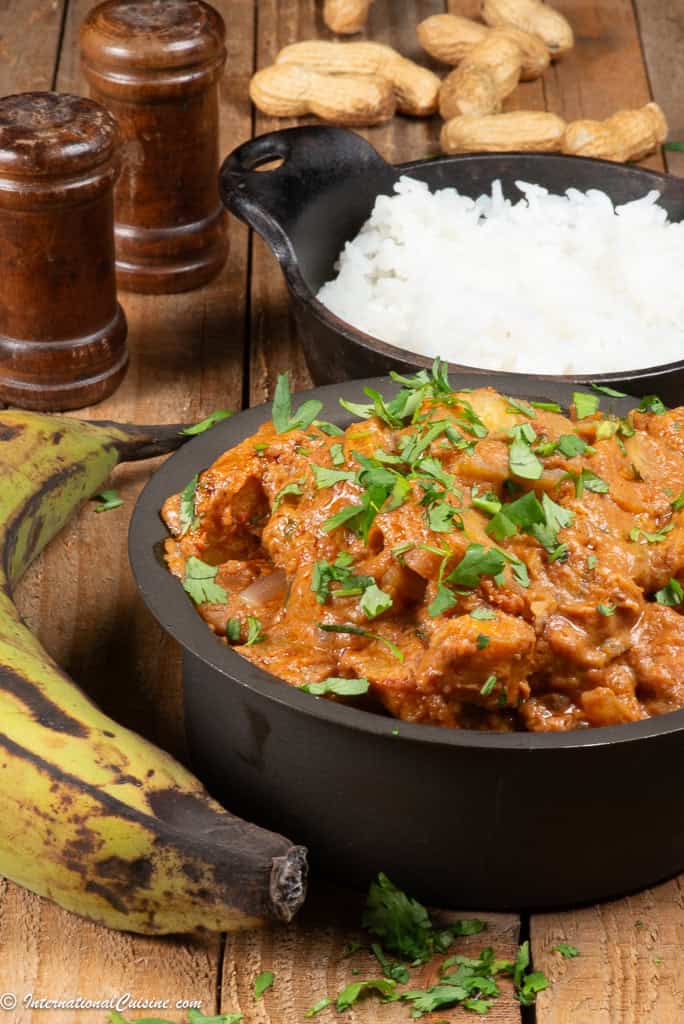
    A bowl of matoke Uganda's national dish. A banana stew smothered in peanut sauce and served with rice.

    Although many visitors think bananas are eaten only as fruit, matoke bananas are a special variety of starchy cooking bananas that are harvested while still green. Unlike sweet dessert bananas, they become soft and creamy when cooked, creating a texture similar to potatoes.

    What is Matoke?

    Matoke (also spelled matooke) refers both to the green East African Highland bananas and to the finished dish made from them. In Uganda, these bananas are a dietary staple, especially in the central and western regions, where they have been cultivated for centuries.

    The bananas are peeled while still green, steamed or simmered until tender, then incorporated into a flavorful stew. Depending on the region and family tradition, matoke may be prepared simply with onions and tomatoes or enriched with peanut sauce, beef, chicken, or beans.

    The History of Matoke

    Cooking bananas have been grown in Uganda for well over a thousand years and are believed to have been introduced through ancient trade routes from Southeast Asia. Over time, Uganda became one of the world’s largest producers of East African Highland bananas.

    As the bananas flourished in Uganda’s fertile volcanic soils, matoke evolved into a cornerstone of the country’s cuisine. Today it remains one of the most recognizable national dishes and is served in homes, restaurants, and at celebrations throughout the country.

    What Does Matoke Taste Like?

    Matoke has a mild, slightly earthy flavor that readily absorbs the seasonings and sauces it is cooked with. As it cooks, the bananas soften into a creamy texture that is both filling and comforting.

    When paired with Uganda’s popular peanut sauce, the result is a rich, savory dish balanced by the natural sweetness of the bananas. Tomatoes, onions, garlic, and warming spices add layers of flavor without overpowering the delicate taste of the matoke itself.

    How is Matoke Served?

    Matoke is traditionally enjoyed as a main course and is often served alongside:

    • Groundnut (peanut) sauce
    • Beef or chicken stew
    • Beans
    • Fresh vegetables
    • Rice
    • Chapati

    It is also commonly served during family gatherings, weddings, holidays, and other special occasions, making it much more than an everyday meal, it is a dish that brings people together.

    Is Matoke Healthy?

    Yes. Matoke is naturally:

    • Rich in fiber
    • A good source of potassium
    • Low in fat
    • Gluten-free
    • High in complex carbohydrates that provide lasting energy

    When prepared with vegetables and a peanut-based sauce, it becomes a balanced meal packed with vitamins, minerals, and plant-based protein.

    Can You Make Matoke Outside Uganda?

    Traditional East African Highland bananas can be difficult to find outside Africa, but green plantains are often used as a substitute. While the texture differs slightly, they create a delicious version that captures the spirit of this classic Ugandan dish and is what I used for the recipe.

    Why You’ll Love This Matoke Recipe

    This authentic Ugandan matoke recipe combines tender cooking bananas with a creamy peanut sauce for a comforting meal that showcases the flavors of East Africa. Whether you’re exploring world cuisines or simply looking for a satisfying vegetarian dinner, matoke is a wonderful introduction to Uganda’s rich culinary traditions.

    If you would like to learn more about the beautiful country of Uganda be sure to check out "Our Journey to Uganda." There you will find authentic recipes like Ugandan Rolex Recipe and a wonderful dessert to enjoy with cup of Ugandan coffee or tea called Queen Cakes.

    Craving even more?  Be sure to join the culinary and cultural journey around the world so you don’t miss a thing,  it’s free,  You can also follow me on Instagram, Facebook ,  Pinterest and youtube to follow along our journey.

    A bowl of matoke Uganda's national dish smothered in peanut sauce and served with rice.
    Print Pin
    No ratings yet

    Matoke (Ugandan Banana Stew)

    This is Uganda's national dish
    Course Main Course
    Cuisine Ugandan
    Prep Time 15 minutes minutes
    Cook Time 40 minutes minutes
    Total Time 55 minutes minutes
    Servings 4
    Calories 409kcal
    Author Darlene at International Cuisine

    Ingredients

    • 4 Matoke (green bananas) or Plantains Peeled and chopped into bite size pieces
    • 1/2 cup Peanuts (roasted, skinned and ground) (you can use a spice grinder for this)
    • 1 Tbsp Vegetable oil
    • 1 medium onion chopped finely
    • 1 tsp cumin seeds
    • 1/2 tsp mustard seeds
    • 2 cloves garlic minced
    • 1 inch ginger grated
    • 3 chilies minced (use whatever kind you like according to your heat tolerance)
    • 4 tomatoes peeled and chopped
    • 1/2 tsp turmeric powder
    • 1 tsp cumin powder
    • 1 tsp coriander powder
    • 1 coriander (fresh) for garnish

    Instructions

    • In a large skillet or dutch oven heat the oil and add in the cumin and mustard seeds. When they start to pop, add in the onions and fry until golden.
    • Add in the tomatoes, garlic, ginger and chilies. Cook for another 5 minutes add in the turmeric, coriander and cumin powder mix well and cook an additional 5 minutes.
    • Add in the matoke and stir well until all the banana pieces are coated by the sauce.
    • Add in the ground peanuts and mix. Add 1 cup of water add more if necessary and bring to a boil. Turn down to a simmer and cook for about 20 more minutes.
    • Garnish with fresh chopped coriander. Serve with rice or chapati.
    Nutrition

    Calories: 409kcal | Carbohydrates: 72g | Protein: 10g | Fat: 14g | Saturated Fat: 2g | Polyunsaturated Fat: 5g | Monounsaturated Fat: 5g | Trans Fat: 0.02g | Sodium: 24mg | Potassium: 1492mg | Fiber: 8g | Sugar: 38g | Vitamin A: 3417IU | Vitamin C: 101mg | Calcium: 62mg | Iron: 3mg

    More Recipes

    • a picture of a rolex the ubiquitous street food in Uganda which is rolled eggs in a wrapper.
      Ugandan Rolex Recipe: Rolled Egg and Chapati Street Food
    • A batch of light and fluffy Ugandan queen cakes.
      Authentic Ugandan Queen Cakes: Traditional Tea Cakes
    • A colorful bowl of Turkmenistan Fried Eggplant Salad
      Turkmenistan Fried Eggplant Salad Recipe
    • Slices of Ichlekli- a thin meat pie.
      Ichlekli Recipe - The National Dish of Turkmenistan
    • Facebook
    • Twitter

    Filed Under: Africa, Main Dish, Recipes, Uganda

    Leave a Reply Cancel reply

    Your email address will not be published. Required fields are marked *

    Recipe Rating


    Welcome to Internationalcuisine.com! thank you for stopping by!

    I'm thrilled to share my passion for food, travel, and cultural exploration with you. My name is Darlene Longacre and I am a culinary enthusiast turned global nomad.

    Imagine a journey where your taste buds can travel the world, experiencing new flavors and aromas of every country on earth.

    More about me →


    My Mission

    At Internationalcuisine.com, my mission is to bring the world to your kitchen and inspire a global culinary adventure. I believe that food is a powerful bridge that connects people, cultures, and traditions. My mission is to celebrate this unity and diversity by sharing authentic recipes, engaging stories, and immersive travel experiences.

    Come join the journey, explore new countries and embark on a fantastic culinary adventure.

    Join the Journey It's Free!

    Sign up for my culinary, travel and cultural adventure delivered right to your inbox so you won't miss a thing.

    Categories

    Genesis Theme Framework for WordPress

    Archives

    • November 2026
    • October 2026
    • September 2026
    • November 2024
    • April 2024
    • August 2023
    • June 2023
    • May 2023
    • October 2022
    • May 2022
    • February 2022
    • January 2022
    • December 2021
    • September 2021
    • May 2021
    • March 2021
    • February 2021
    • January 2021
    • October 2020
    • September 2020
    • July 2020
    • June 2020
    • May 2020
    • April 2020
    • March 2020
    • February 2020
    • January 2020
    • December 2019
    • November 2019
    • October 2019
    • September 2019
    • August 2019
    • July 2019
    • June 2019
    • May 2019
    • March 2019
    • January 2019
    • December 2018
    • November 2018
    • October 2018
    • September 2018
    • August 2018
    • July 2018
    • June 2018
    • May 2018
    • April 2018
    • March 2018
    • January 2018
    • December 2017
    • November 2017
    • October 2017
    • September 2017
    • August 2017
    • July 2017
    • June 2017
    • May 2017
    • April 2017
    • March 2017
    • January 2017
    • December 2016
    • November 2016
    • October 2016
    • September 2016
    • August 2016
    • July 2016
    • June 2016
    • May 2016
    • April 2016
    • March 2016
    • February 2016
    • January 2016
    • December 2015
    • November 2015
    • October 2015
    • September 2015
    • August 2015
    • July 2015
    • June 2015
    • May 2015
    • April 2015
    • March 2015
    • February 2015
    • January 2015
    • December 2014
    • November 2014
    • October 2014
    • September 2014
    • August 2014
    • July 2014
    • June 2014
    • May 2014
    • April 2014
    • March 2014
    Genesis Theme Framework for WordPress

    Meta

    • Log in
    • Entries feed
    • Comments feed
    • WordPress.org

    Featured Posts

    a picture of a rolex the ubiquitous street food in Uganda which is rolled eggs in a wrapper.

    Ugandan Rolex Recipe: Rolled Egg and Chapati Street Food

    A bowl of matoke Uganda's national dish. A banana stew smothered in peanut sauce and served with rice.

    Matoke (Ugandan Banana Stew)

    A batch of light and fluffy Ugandan queen cakes.

    Authentic Ugandan Queen Cakes: Traditional Tea Cakes

    Get to know Darlene at International Cuisine

    Darlene holding a dish made with Mama Naz and her daughter in law, in Arusha, Tanzania

    Welcome to International Cuisine

    Hello my name is Darlene and thank you for stopping by!

    I am cooking a meal from every country in the world. I do extensive research and choose a menu that I feel best represents the country and their cuisine. Of course that also includes the authentic, delicious recipes. Simply click on the link or the photo in the journey by country posts to get them. I also share important information about the country as well.

    I love to cook, photograph, and especially travel. I hope you enjoy this culinary and cultural adventure around the world. Be sure to join the journey so you don't miss a thing. It's free!

    Footer

    ↑ back to top

    Privacy Policy

    International Cuisine is a long running culinary project documenting authentic recipes and food traditions from every country in the world; researched, tested and paired with cultural context. Get authentic and ancestral recipes from every country in the world, join the culinary and global travel adventure today!

    Copyright © 2026 InternationalCuisine.com All rights Reserved

    Rate This Recipe

    Your vote:


    A rating is required
    A name is required
    An email is required