
Along the shores of Carthage, the sea still tells the same story.
The first thing I noticed was not the fish.
It was the hands.
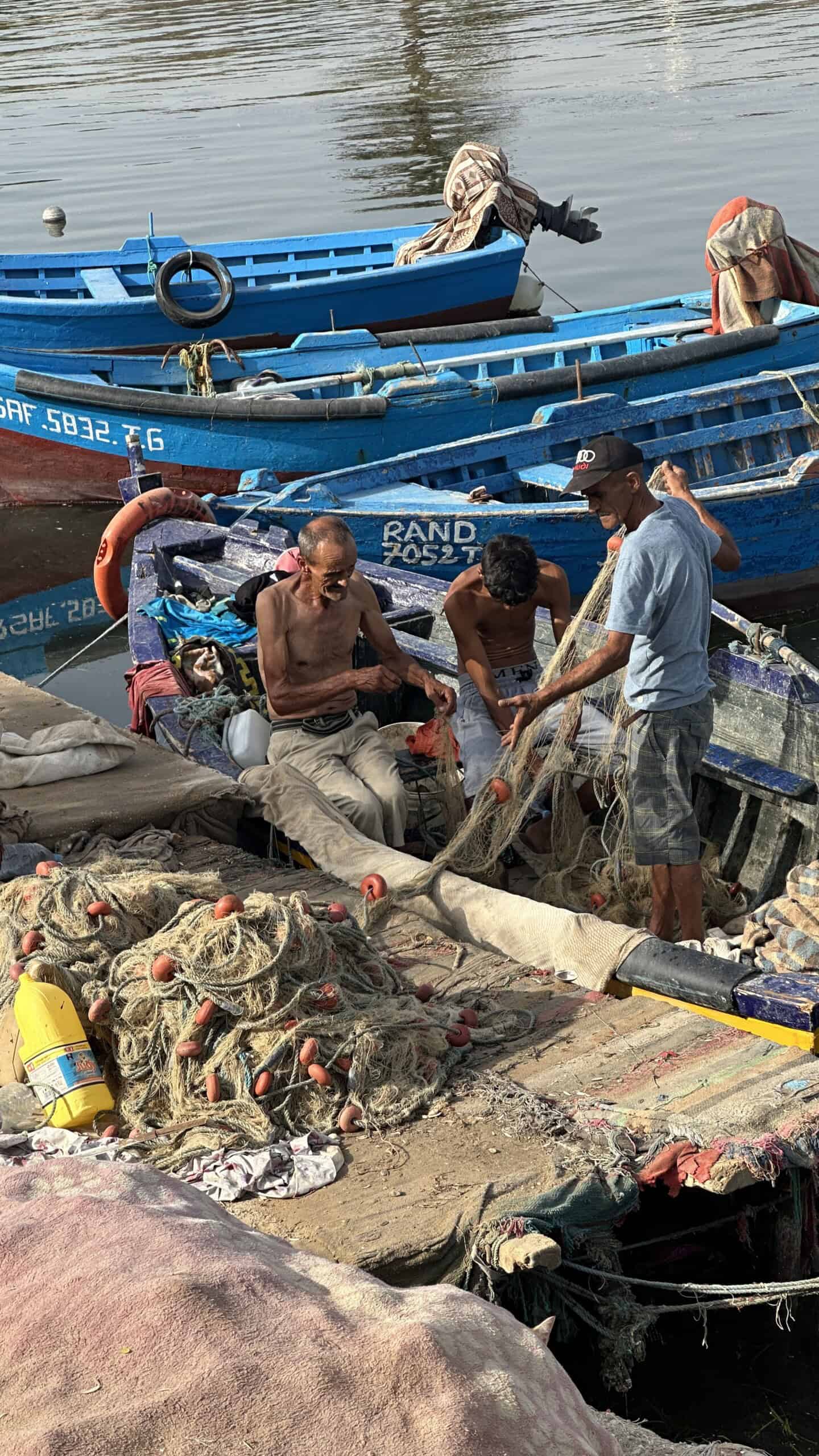
Three generations sat together in a small blue boat along the edge of the ancient Punic Port in Carthage. The grandfather patiently mended a fishing net while his son worked beside him. His grandson watched every movement, occasionally reaching out to help, learning a craft that had been passed from father to son for countless generations.
Dan quietly lifted his camera.
Neither of us spoke.
Some moments deserve silence.
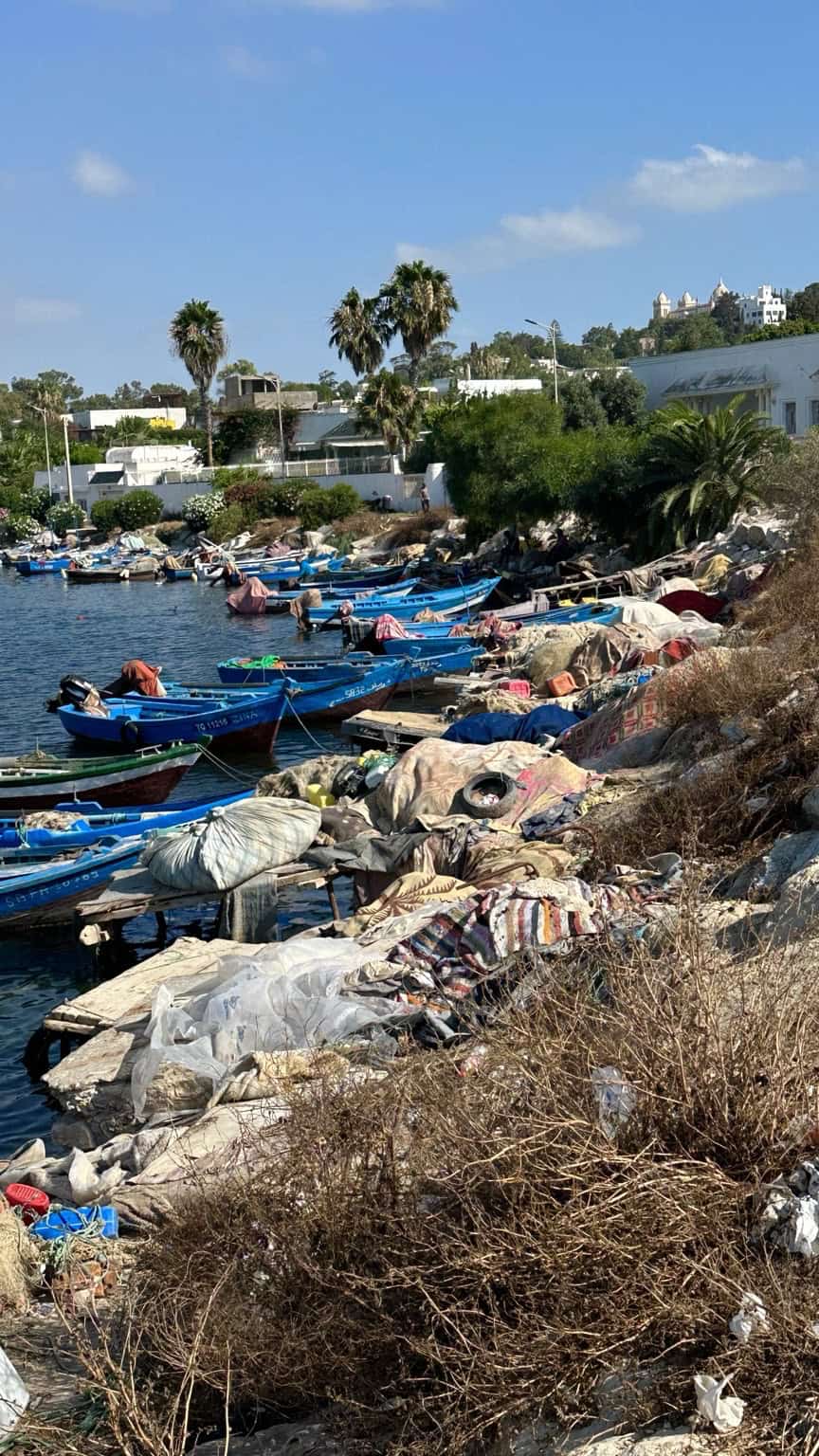
Only a few yards away lay one of history’s greatest harbors. More than two thousand years ago this circular military port buzzed with Phoenician sailors preparing ships that would sail throughout the Mediterranean. Today the warships are gone. The empire has vanished. Yet fishermen still gather here before dawn, just as they always have.
The tools may be different.
The purpose has not changed.
The sea still provides.
The following day we visited the Bardo Museum, home to one of the world’s finest collections of Roman mosaics. I wandered slowly through the galleries, captivated by the incredible artistry. One mosaic in particular stopped me in my tracks. It was filled with marine life rendered in astonishing detail. Sea bream, sea bass, octopus, squid, and other creatures of the Mediterranean seemed almost to swim across the wall, as if I was looking into the sea. Every scale, every fin, every curling tentacle had been carefully observed by an artist nearly two thousand years ago. Not only the fish but the net that was depicted as the means of catching the fish.
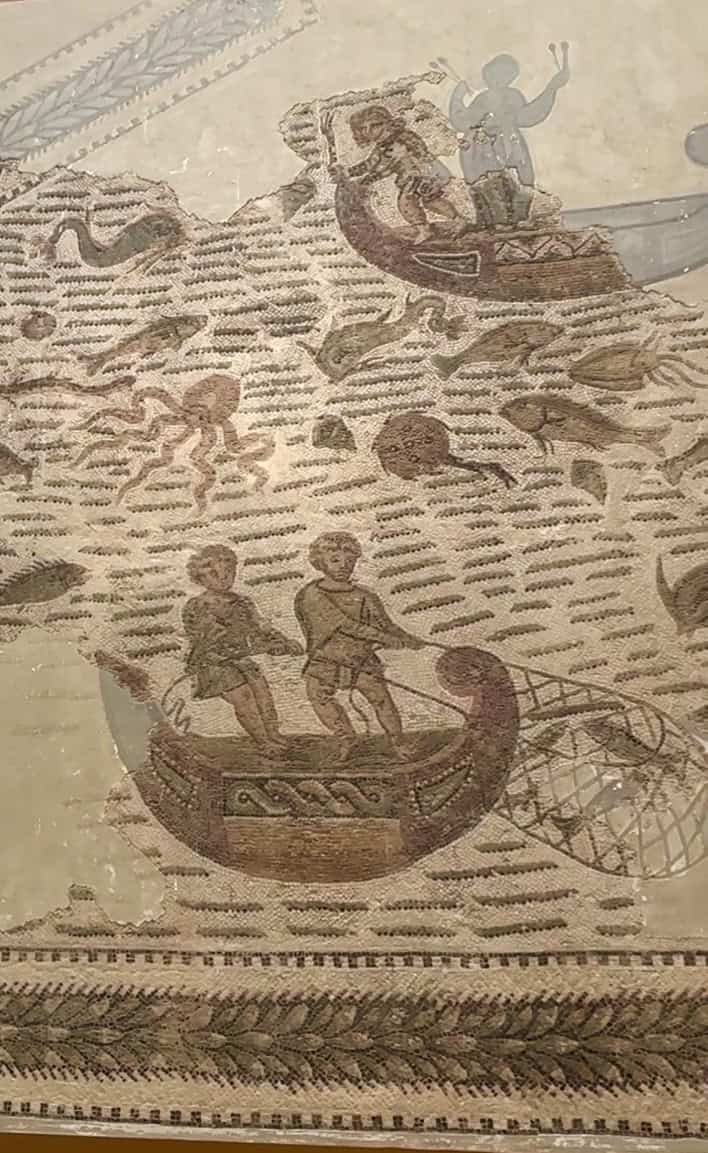
At the time, I simply admired the beauty of the mosaic.
The next morning, I wandered through one of Tunis’s bustling fish markets.
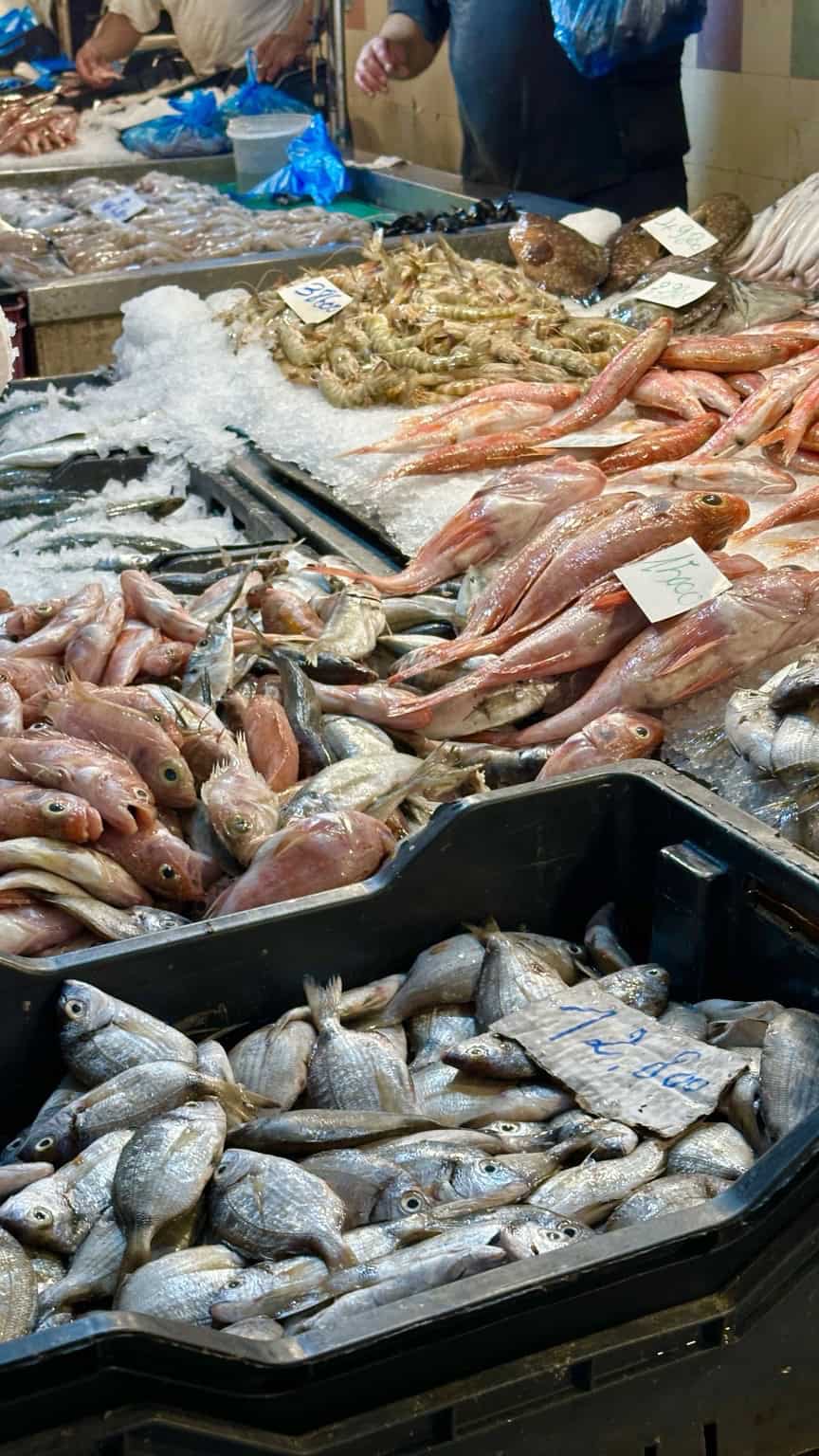
Beds of crushed ice sparkled beneath European sea bass, wild gilthead sea bream, red porgy, little tunny, octopus, squid, cuttlefish, and triggerfish. Vendors called out to customers while carefully arranging the morning’s catch. Some fish remained whole. Others had already been sliced into thick steaks, ready for a family meal.
Then it happened.
The mosaic came rushing back.
There they were.
The same sea bass.
The same sea bream.
The same red porgy.
The same octopus, squid, and cuttlefish.
Not similar fish.
The very same species.
For a moment it felt as though the museum had spilled into the marketplace. Nearly two thousand years disappeared between the tiny mosaic stones that hung on the wall and the beds of crushed ice before me.
The Romans had not filled their mosaics with imaginary creatures. They had celebrated the fish that fed their families, many of the very same fish that continue to nourish Tunisia today.
Perhaps a Roman cook rubbed a freshly caught sea bream with herbs and olive oil before roasting it over an open fire. Today, a Tunisian family might prepare that same fish with homemade harissa, garlic, parsley, preserved lemon, and the rich local olive oil that is among the country’s greatest treasures.
A beautiful red porgy may be baked with potatoes, tomatoes, onions, and cumin before gathering everyone around the table. Little tunny might be gently simmered with tomatoes, olives, and capers. Octopus often finds its way into seafood couscous along the coast or is slowly cooked before being kissed by the flames of a charcoal grill. Squid is stuffed or quickly grilled, while cuttlefish lends both its tender flesh and dark ink to deeply flavorful stews.
The recipes have evolved.
The spices have changed.
The languages spoken around the table are different.
But the sea remains remarkably faithful.
Later that afternoon we returned to the Punic Port.
The same grandfather was still there, patiently repairing his fishing net while his son and grandson worked beside him.
Watching them, I realized the fish were only part of the story.
The mosaics preserved what people caught.
The market revealed what people still eat.
But the fishermen showed me how traditions survive.
A grandfather guiding his grandson’s hands across a weathered net.
Knowledge passed without words.
A skill learned through watching.
A way of life preserved one generation at a time.
I came to Tunisia hoping to gather recipes.
Instead, I found something far more meaningful.
Recipes change. Every family has its own way of seasoning a fish or stirring a pot of couscous. A grandmother adds a pinch of caraway where her neighbor reaches for coriander. One cook grills a whole sea bream over charcoal while another gently bakes it with potatoes and tomatoes. Every generation leaves its own mark on the table.
But traditions live in the people who continue them.
The same Mediterranean still provides the fish that nourished ancient Carthage.
Families still gather around their tables.
Grandparents still teach grandchildren.
And fishermen still mend their nets along the edge of a harbor that has watched over them for more than two thousand years.
Perhaps that is what the sea remembers.
Not the rise and fall of civilizations.
But the ordinary people who quietly carry their traditions from one generation to the next.
As I watched those weathered hands patiently repairing a net while another pair of hands learned beside them, I realized the greatest treasures we gather are rarely found in museums or markets.
They are found in the people willing to pass something on.
And perhaps that is what I had really come to gather. Not recipes alone, but the threads that connect us across time, quietly woven into the hands, hearts, and tables of those willing to pass them on.
Leave a Reply