
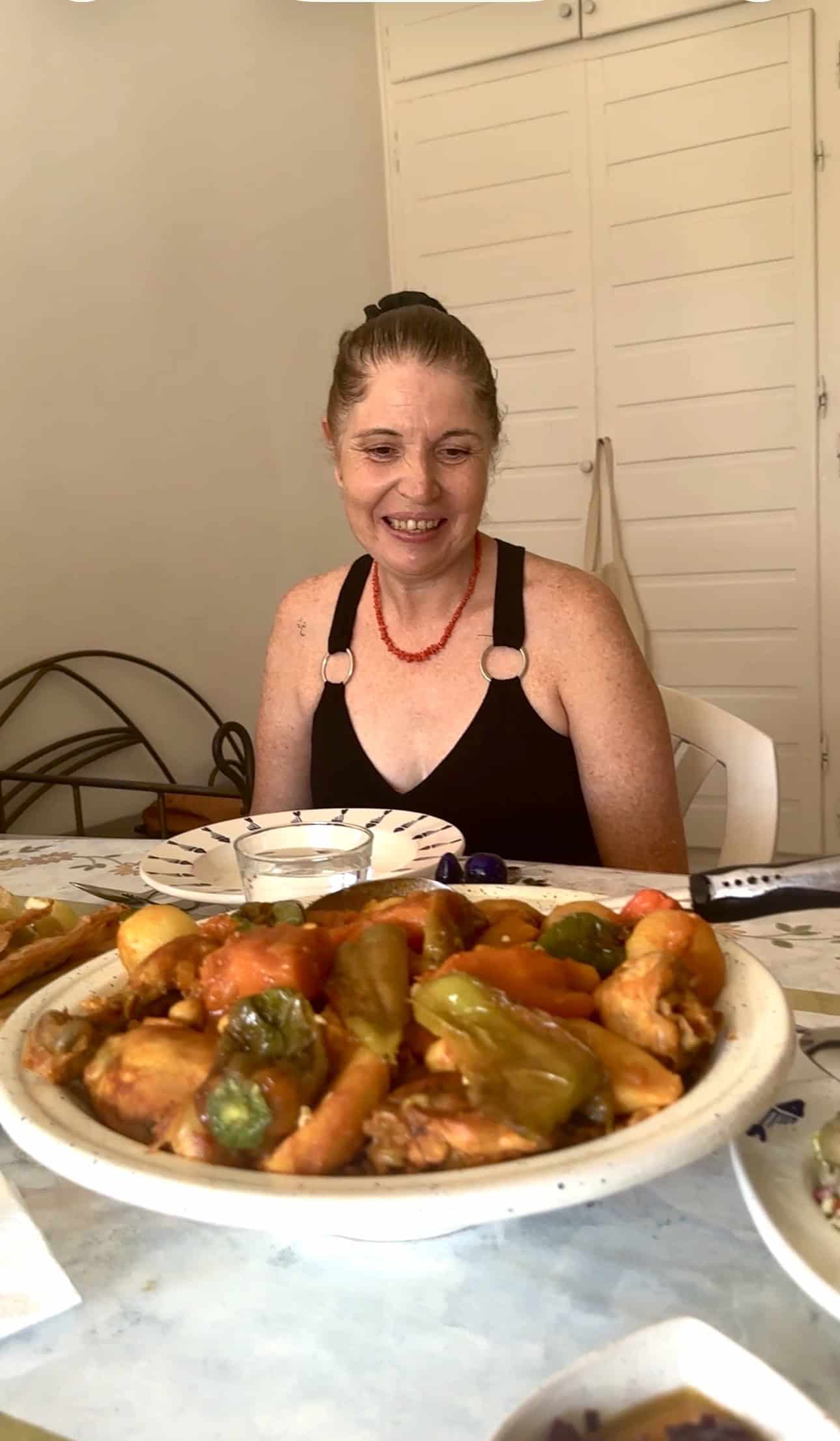
For years, I thought I was traveling to collect recipes.
Somewhere along the way, I realized I was really collecting something else.
I was collecting stories.
The recipes simply gave me a reason to sit down at someone else’s table.
After cooking my way through all 197 countries of the world, I find myself increasingly drawn to the things that are harder to capture in a recipe. The traditions passed from grandmother to granddaughter. The dishes made by instinct rather than measurements. The harvests that still bring an entire family together. The foods that take too much time to make anymore and the people who refuse to let them disappear.
That realization has inspired a new chapter for International Cuisine.
I’m calling it Gathered: Stories, recipes and traditions from around the world’s tables.
And I can think of no better place to begin than in a family kitchen in Tunisia.
In Jiji’s Kitchen
There is something magical that happens when you step into someone’s home instead of a restaurant.
The kitchen immediately becomes more than a place to cook. It becomes a place where stories are exchanged, traditions are shared, and strangers somehow leave feeling like friends.
As I tied on my apron in Jiji’s kitchen, I said something I have probably felt a hundred times during my travels.
“There is nothing better than being in somebody’s home, in somebody’s kitchen, learning how to cook.”
And I meant it.
Before we chopped a single onion, we were already talking about life. We laughed about travel and living out of a suitcase. We talked about why experiences have become more important to me than possessions. We traded stories about favorite countries and the people we had met along the way.
The recipes matter.
The people matter more.
Jiji’s own journey into teaching Tunisian cooking began almost by accident. She, her mother, and her brother had taken a cooking class while traveling in Turkey and came home thinking, Why couldn’t we do this with Mom? She’s the best cook.
They applied to offer a cooking experience and then nearly forgot about it. Months later, her brother received an email confirming their first guest for the very next day.
They panicked.
New knives were bought. Aprons were found. The family kitchen became a cooking school.
That was how it began.
Now travelers from around the world gather in this same kitchen to learn the food Jiji grew up eating.
The Food We Gathered Around
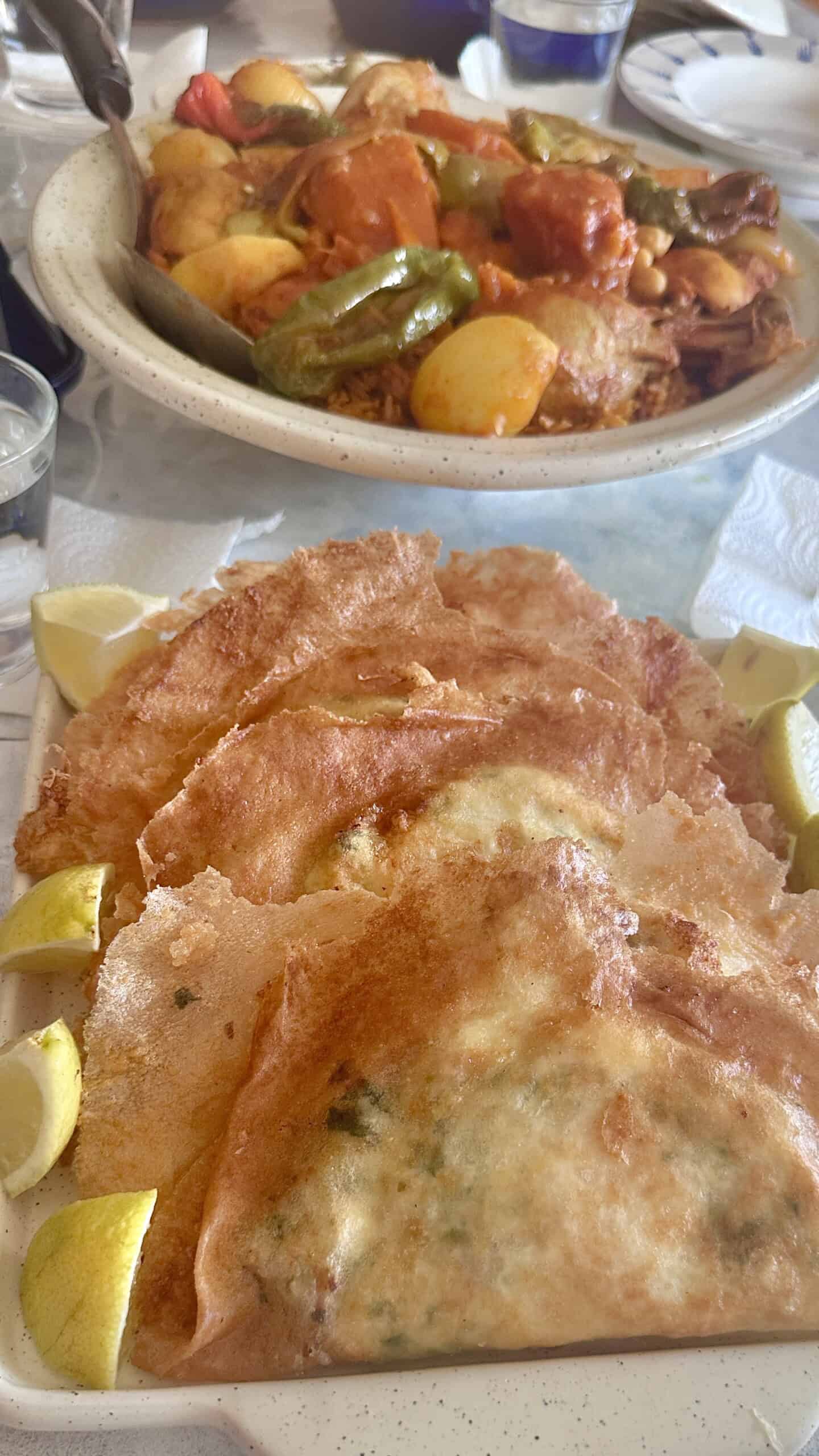
Our meal began with Brik, one of Tunisia’s most beloved dishes.
The pastry itself was impossibly thin, much more delicate than phyllo. We filled it with tuna, parsley, onion, cheese, and an egg. The trick was creating a little cradle in the filling to hold the egg, folding the pastry quickly, and sliding the whole thing into hot oil without breaking the yolk.
Timing was everything.
I wanted mine runny.
When we finally cut into the crisp golden pastry at the table, the yolk spilled out exactly as it should.
Success.
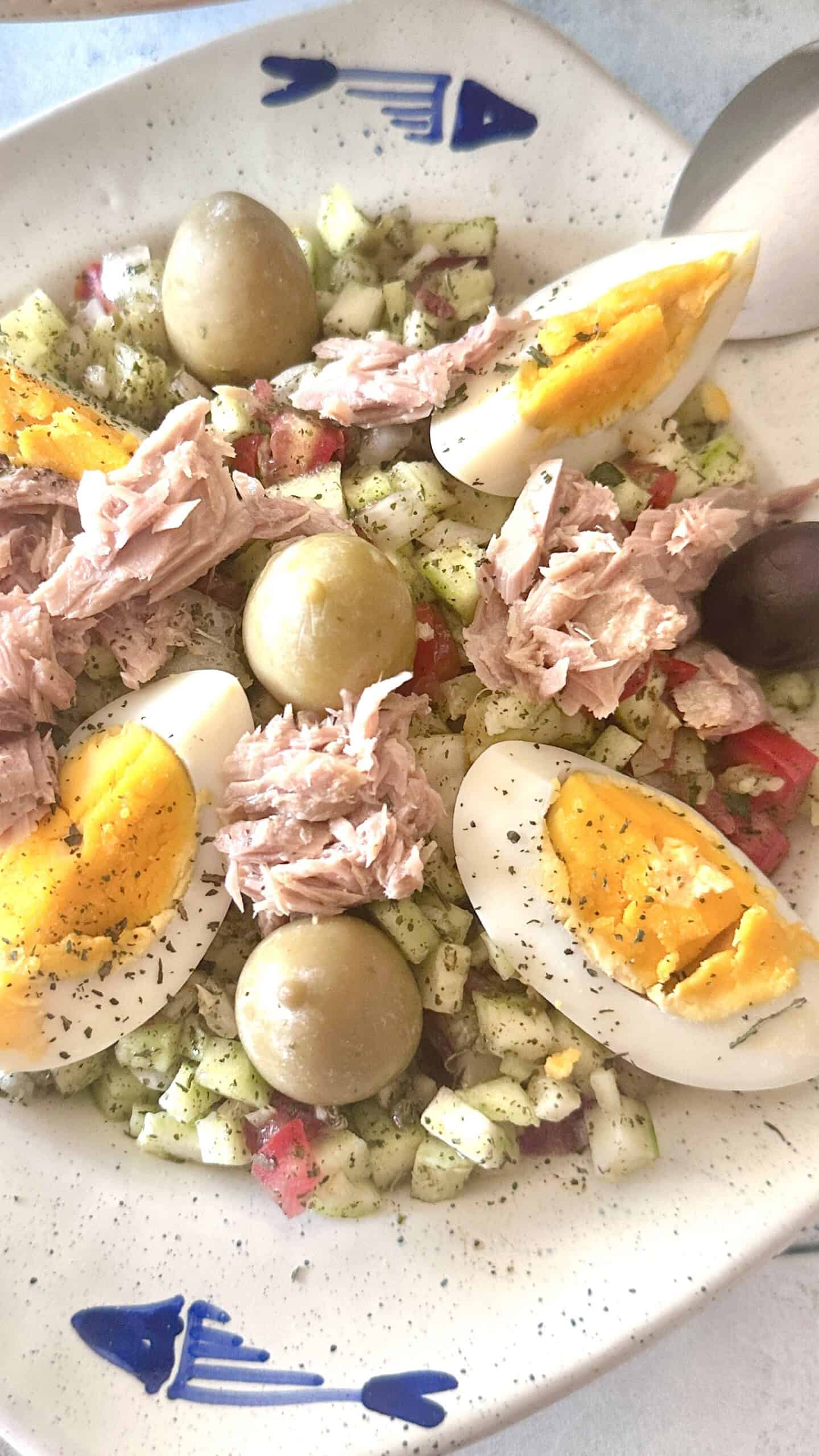
We also made a colorful Tunisian salad with finely chopped tomatoes, cucumber, onion, garlic, preserved lemon, olives, tuna, hard boiled eggs, and fresh mint from the garden. It was dressed simply with vinegar, salt, and plenty of olive oil.
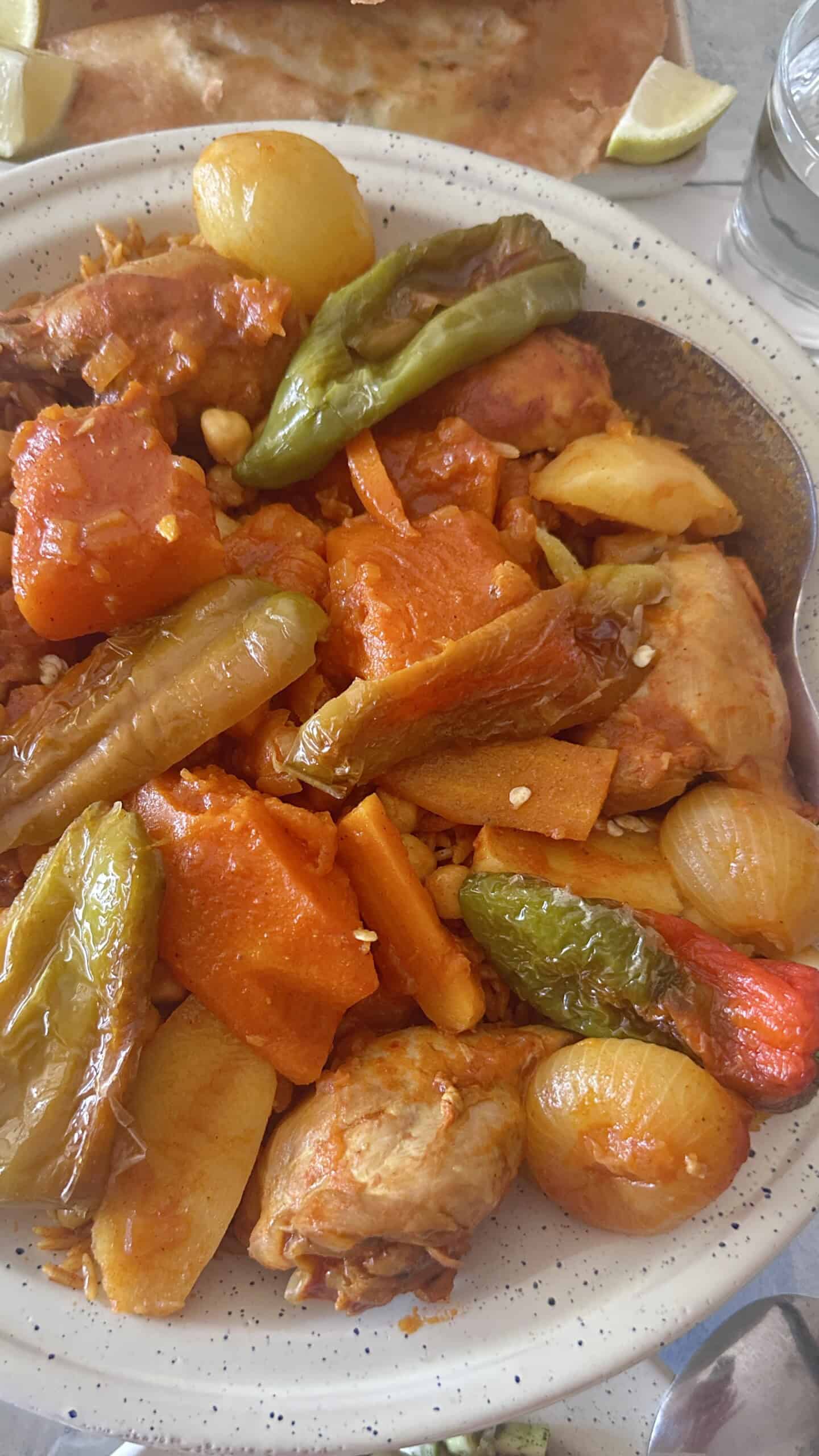
Then came Dwinda, our main course.
This was where Jiji taught me one of my favorite techniques of the day.
We cut small slits into whole peppers and tucked tabil, the fragrant Tunisian spice blend, inside them. The peppers went into olive oil first, flavoring the oil with the spices hidden inside. Once the peppers were removed, that same seasoned oil became the beginning of the Dwinda.
I had never seen peppers seasoned from the inside before.
Such a simple technique, yet one I know I will remember.
The Dwinda was made with tiny pasta that reminded me of couscous, steamed above the simmering sauce before eventually coming together with the chicken, vegetables, chickpeas, and all those wonderful Tunisian spices.
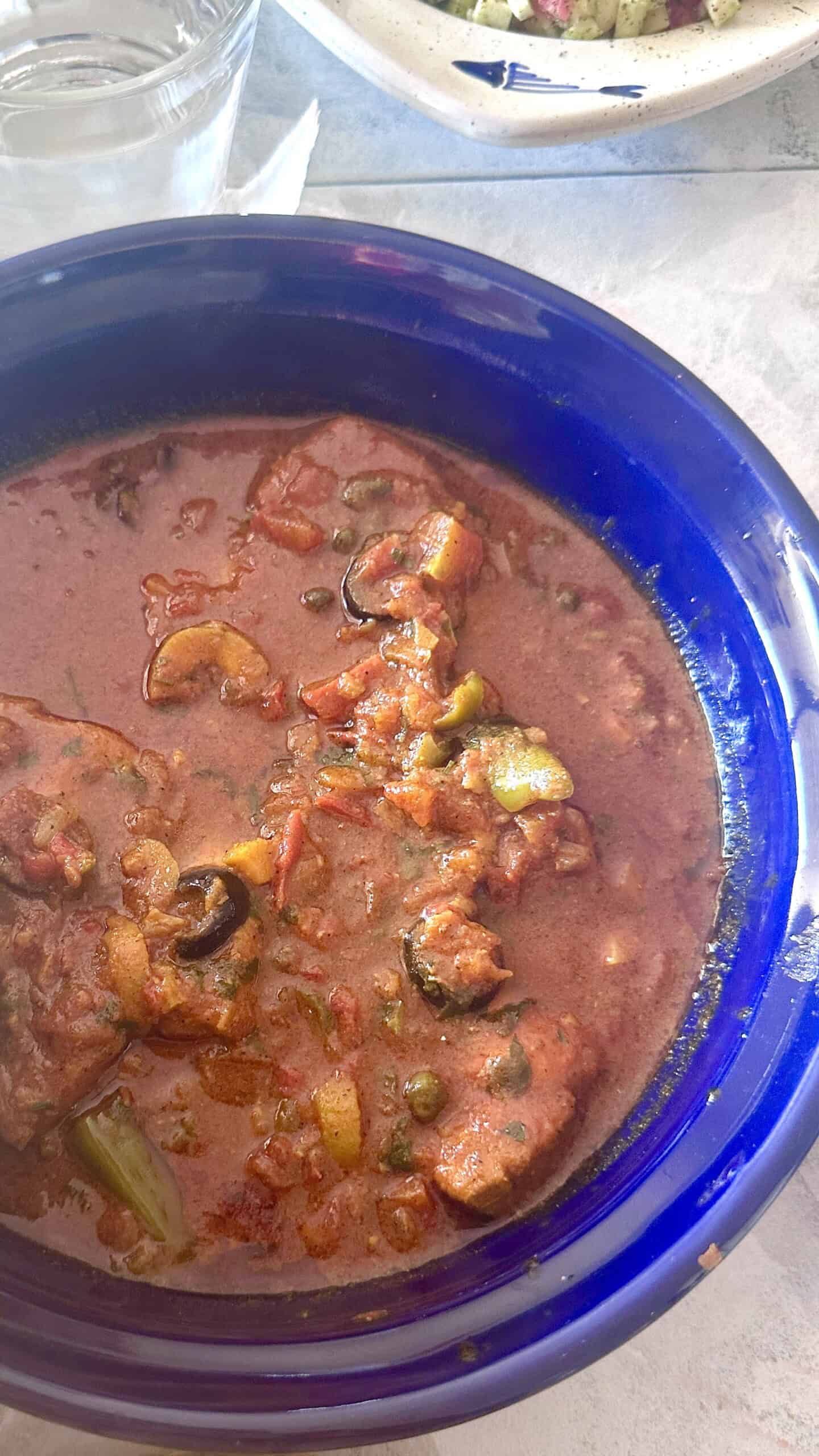
Beside it we prepared Kabkabou, a wonderfully saucy swordfish dish with tomatoes, garlic, olives, capers, and preserved lemon.
Jiji explained that cumin has a very particular place in Tunisian cooking. It is used primarily with fish, and this was its moment to shine.
Kabkabou isn’t meant to be eaten politely while leaving the sauce behind.
You need bread.
Lots of it.
The sauce is part of the dish, meant to be soaked up with pieces of crusty bread until there is nothing left on the plate.
Harissa, Olive Oil and Generosity
Of course, there was harissa.
Jiji brought out her homemade version and served it simply with her family’s olive oil poured over the top.
I have tasted olive oil all over the world. I have visited producers in Italy and Croatia, walked through olive groves, and done more olive oil tastings than I can count.
This one stopped me.
It was the best olive oil I have ever tasted.
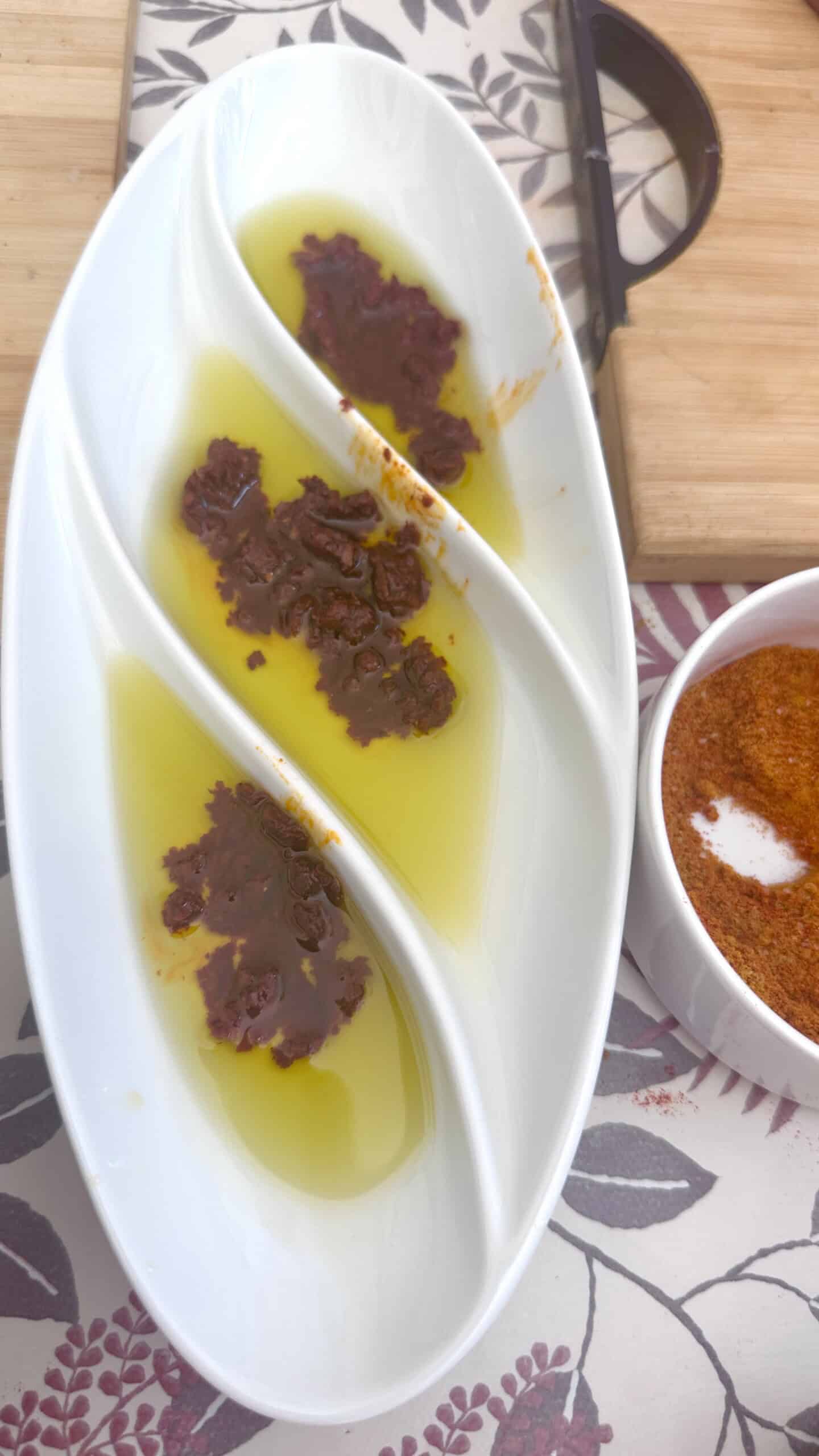
When I asked where it came from, I learned that it came from Jiji’s own family.
Suddenly, the olive oil sitting on the table wasn’t simply another ingredient.
It had a story.
Jiji told me about the family olive harvest, when everyone comes together to gather the olives. There is work, food, family, and singing among the trees. Then the olives are taken through the process that transforms the harvest into the oil we were now pouring generously over our food.
Immediately, I wanted to see it.
“Do you sing when you pick olives?” I asked.
“Yes.”
That was all I needed to hear.
I told her I wanted to come back.
“If you are here in October, maybe we can go together,” she said.
It was an invitation I won’t soon forget.
And Jiji’s generosity didn’t end at the table.
Before I left, she gave me a jar of her homemade harissa to take with me.
For someone who lives out of a suitcase and rarely has room to collect anything, this was exactly the kind of souvenir worth making room for.
What Are We Losing?
Somewhere between chopping vegetables and passing dishes around the kitchen, I asked Jiji a question I have been thinking about more and more.
What food traditions are disappearing?
She began telling me about the things her family once routinely made at home.
Brik pastry was traditionally handmade, created by applying an incredibly thin layer of dough over a hot surface. Today, most people buy it.
And then there was couscous.
Traditionally, families made their own from semolina and water. It was painstakingly rolled by hand and spread across large bedsheets outside to dry in the summer sun.
Most people don’t do that anymore either.
But Jiji’s aunt still does.
She makes enough couscous for the entire family.
She also continues to make things like geranium water, rose water, and orange blossom water, preserving skills that were once simply part of everyday life.
I couldn’t stop thinking about her.
One aunt making couscous for everyone.
One person carrying knowledge that once belonged to generations of women.
What happens when she stops?
That question is at the heart of Gathered.
I want to find the people who still know how.
The grandmother rolling couscous beneath the Tunisian sun.
The family singing as they gather olives.
The baker tending an old bread oven.
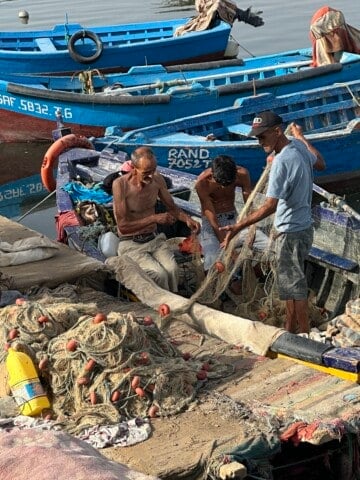
The fisherman teaching his grandson how to mend a net.
The recipes are important, of course.
But I want to understand the traditions behind them, and the people keeping those traditions alive.
A Place at the Table
When everything was finally ready, we gathered around Jiji’s table.
There was our crisp Brik with its golden, runny yolk. Bowls and platters of Dwinda. The Kabkabou with its tender swordfish and sauce begging for another piece of bread. Our bright Tunisian salad. Jiji’s homemade harissa glistening beneath her family’s olive oil.
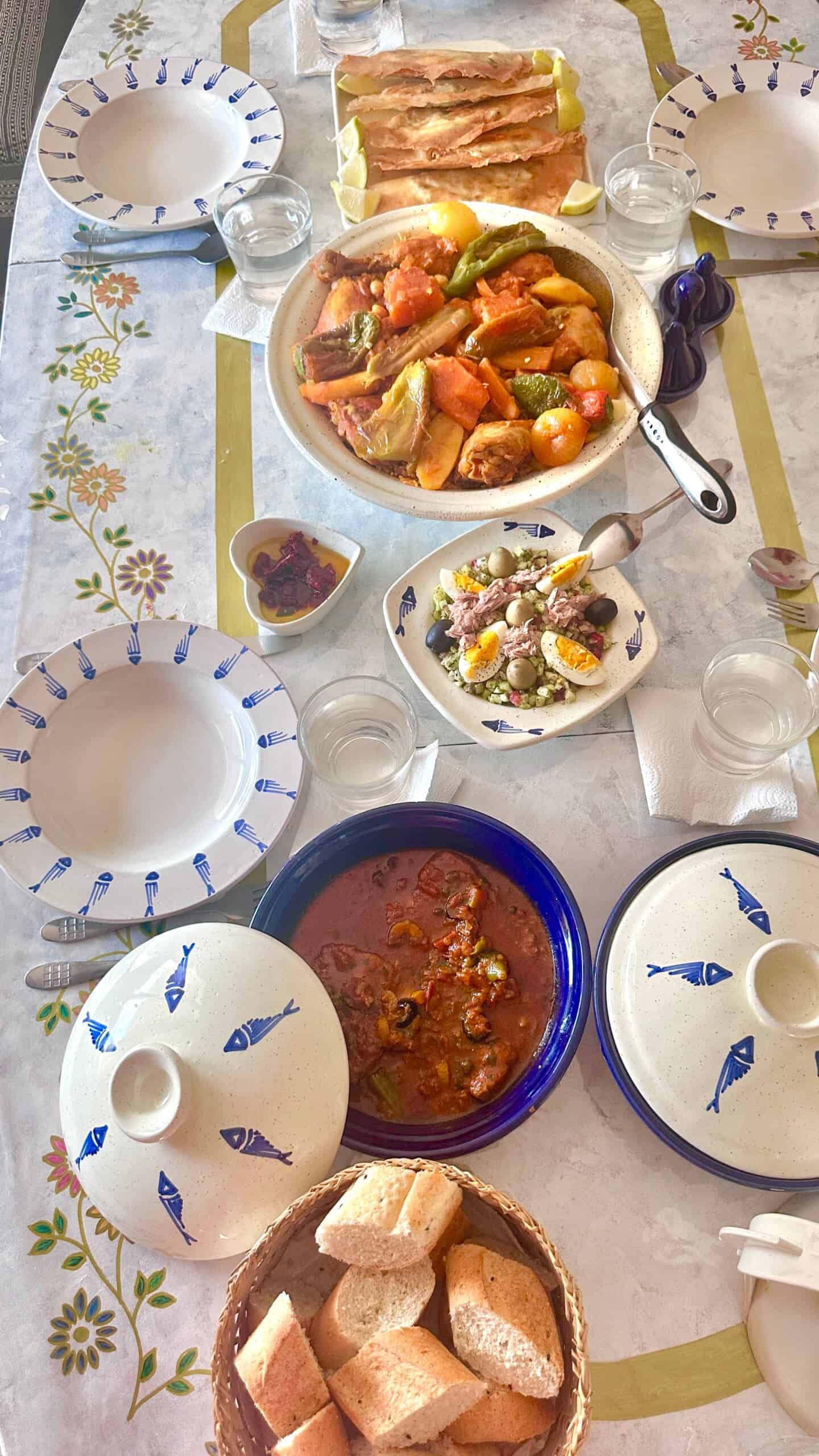
We had cooked far too much food.
Nobody seemed particularly concerned.
We ate. We talked. We laughed. We passed plates back and forth and tore pieces of bread to soak up the sauces.
A few hours earlier, we had been strangers.
Now we were gathered around the same table.
And perhaps that is what I have really been searching for all these years.
Not another recipe.
Not another country to check off a list.
A place at the table.
As I left Jiji’s home, I carried her homemade harissa with me and another gift that weighed nothing at all.
An invitation to return.
To stand among her family’s olive trees.
To help gather the harvest.
And, if I’m lucky, to sing with them.
Those are the stories I want to gather now.
And I hope you’ll come along with me.
Darlene
Leave a Reply