
 Deutschland means “of the people” and is what the Germans call their homeland. “Deutsch” is what they call themselves. Germany is located in central Europe, bordered by the Baltic Sea and the North Sea and lying between the Netherlands and Poland and the south of Denmark. Her other neighbors are Czech Republic, Austria, Switzerland, Luxembourg, France and Belgium. Germany is the second most populous country in all of Europe, after Russia, with over 82 million who call Germany home. The ethnicity is made up of over ninety percent Germans, two percent Turkish (as the second largest ethnic group) and the remainder, immigrants from neighboring countries.
German is the language they speak and is the third most popular language in the world. Five other countries list German as their official language. Germany has an intriguing and vast history. The region had been part of the Holy Roman Empire and actually did not unite as a singular country until 1871, when it became the German Empire. The princes of the German States gathered and proclaimed Wilhelm I of Prussia, as the German Emperor. In years to come the Imperial German Army became the most powerful military in Europe. The German economy was rapidly growing, as was German pride and intense nationalism.
Although Germans had been involved in many conflicts in conjunction with other empires, the newly formed German Empire payed a massive price for their involvement in World War I. In fact, they just recently finished paying off the huge reparations. After World War I, Germany suffered greatly in the early 1920s with hyperinflation. This occurred when they missed a reparation payment. Things happened so fast, that one could not make it to the store, with a wheel-barrel full of Deutsch marks, quickly enough to purchase a loaf of bread. People burned their marks to stay warm, as it was more cost effective than paying for heat. It was during this time that Adolf Hitler started his rise to power as head of the National Socialist German Workers Party or Nazi for short. The Germans were angry with the price of the war and when the Great Depression hit, unemployment was unbearable. Hitler was a spellbinding orator that told the Germans exactly what they wanted to hear. He was appointed Chancellor of Germany in 1933.
What transpired next was the rise of the Third Reich. Ethnic cleansing, anti-Semitism and genocidal atrocities perpetrated by the Nazis, became known as the Holocaust. Eleven million people were killed in Germany and surrounding countries during the Holocaust; 6 million were Jews, 1.1 million children, along with other groups targeted by the Nazis for termination such as, Jehovah’s Witnesses, homosexuals, disabled people and Romas (Gypsies.) Millions of others, that were not exterminated, were tortured and suffered for years in German concentration camps. This horrific chapter of Germany’s history has been difficult to overcome. Yet we can’t forget that many other countries and empires around the world have also endured similar atrocities and somehow managed to evolve as a people. Today, Holocaust denial, using the Hitler salute of “Heil Hitler”, or displaying the swastika, constitutes a crime in Germany. We can only hope that this dark past will be eclipsed by the decency, progress and hard work of Germans today.
After World War II, in 1945, Germany was divided into four zones between the United Kingdom (UK), the United States (US), The United Soviet Socialist Republic (USSR) and France. The capital city, Berlin, was an island in the heart of East Germany. In 1949, West Germany, which included the former UK, US and French zones, united as the Federal Republic of Germany or West Germany. The German Democratic Republic or East Germany included the USSR zone. East Germany lived in isolation for many years while West Germany began its recovery and explored free enterprise. The famous words of Ronald Regan, commanding Gorbachev to “Tear down this wall” (referring to the Berlin wall that was built in 1961 by the USSR to keep East Germans from going to West Germany) contributed to the end of the Cold War. Germany was truly unified between East and West when the wall was torn down and all four powers formally relinquished their rights on March 15, 1991.
Today Germany is thriving. She has one of the highest levels of education, technological development and economic prosperity. Social programs include: universal healthcare, unemployment compensation and child benefits. Germans have made tremendous contributions to the world in multiple areas. Classical music, for example, gave us the genius of Bach, Handel, Beethoven, Strauss and Schumann, to name a few of the world’s most famous composers and all were German. Engineering innovation was another contribution in the automotive industry with the likes of: Porsche, BMW and Mercedes Benz and Volkswagen. If you call for a taxi in Germany, it will likely be a Mercedes Benz and any one of these fine automobiles would be a thrill on the world famous Autobahn, where there is no speed limit. Architecture is another area of pride in Germany. There are over 150 castles in Germany and cathedrals and buildings designed in Romanesque, Gothic, Baroque and Renaissance styles, are found all over the country. A prime example of their world class architecture, is the famous Brandenburg gate. This former city gate is now a symbol of Berlin’s unity. Johannes Gutenberg’s invention of the printing press in 1439 was epochal. Einstein, probably the most recognized scientist in the world, was born in Ulm, Germany. The list of famous German inventions and people goes on and on which is why Deutschland is also known as, “Das land der dichter und denker” (The country of poets and thinkers.)
As we look into the cuisine of this most interesting nation, we find that it is as varied as its past. For hundreds of years, the German Empire consisted of smaller kingdoms, sub-units and duchies. The people of these various regions still carry on their traditions and specialty cuisines. Some might say German food is a bit heavy and there is some truth to that. However, today the modern German cuisine is International and uses a wide variety of fresh ingredients. The cuisine also changes with the seasons; game meat, mushrooms, and certain vegetables, like white asparagus, are wildly popular in the summer. Cabbage, beets, and turnips are native to the region and used year round. Potatoes were introduced by a botanist in 1589 and have become a staple. The potato makes up a large part of the German diet, cooked in numerous delicious ways from pancakes to dumplings, soups and salads. Germans also make over 300 varieties of bread and even have bread museums. Pork is the number one meat consumed and it no surprise, (I think the first thing that came to my mind regarding German food was bratwurst and sauerkraut.) The Germans are famous for wurst (sausage) and they have over 1400 different varieties.
Clearly neighboring countries, including Russia and Turkey, influenced German cuisine, especially in the eastern regions. Back in the 1960s, when Germany was enjoying a huge economic boom, they suffered from an acute labor shortage. The Germans made a trade agreement with Turkey for labor, which is why the Turks are the second largest ethnic group in Germany today.
Depending on what statistic you read, Germany ranks either second or third in the world for beer consumption. Germany is the birthplace of a number of beer varieties. Brews were crafted according to a 16th century, Bavarian law known as Reinheitsgebot or “the purity law.” The law decreed that beer could only be brewed from barley, hops and water. Brewers could only use the yeast available from the air.
One of their most famous beer festivals in Germany is Oktoberfest. It actually begins in September and well may be the largest festival in the world. The festival has been held in Munich each year since Crown Prince Ludwig married Princess Therese of Saxony-Hilldburghausen on October 12, 1810. The citizens of Munich were invited to attend the festivities, held on the fields in front of the city gates, to celebrate the happy royal event. Today some six million visitors converge to enjoy huge steins of beer called “mass” (a liter in size) along with delicious German fares at the Oktoberfest celebration. If you go, know that if you order a beer with your index finger they will bring you two. If you just want one, you need to indicate that with just your thumb. German beer must also compete with their brandy and Schnapps as well as their world famous, German wines.
So let’s enjoy a traditional Deutsch meal:
The Menu
Starter
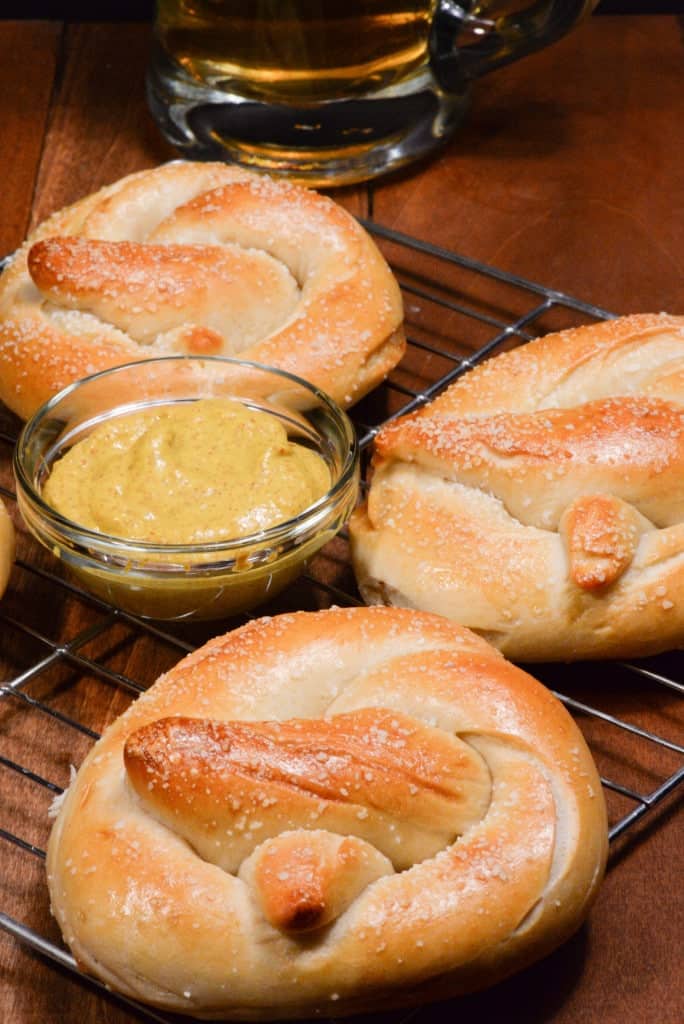
Brezeln (Pretzels and beer, served with mustard)

Main
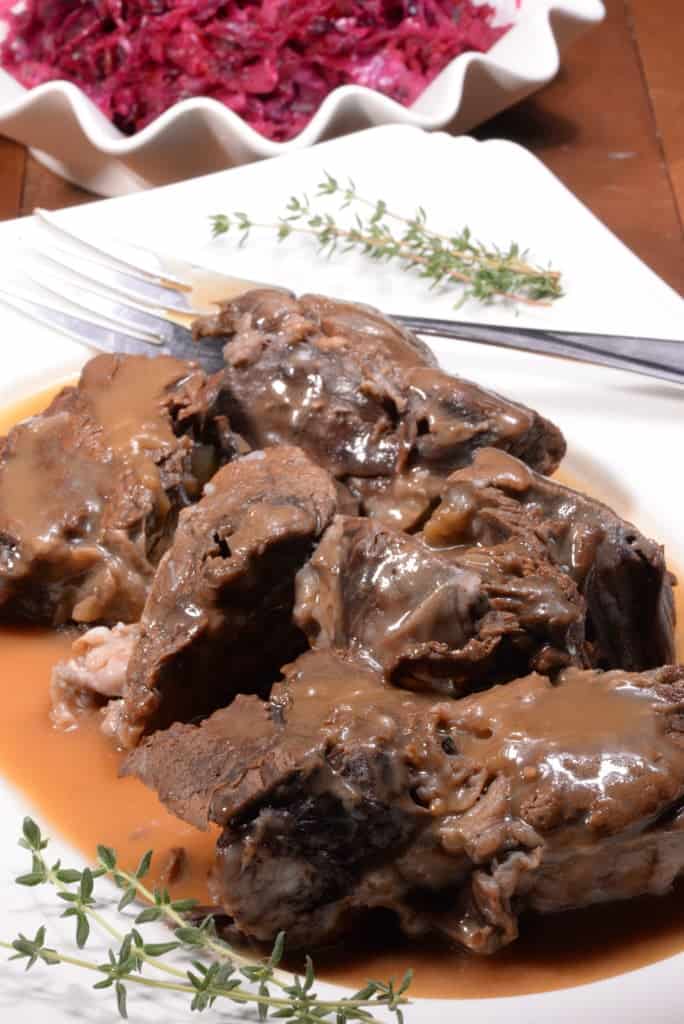
Sauerbraten (Marinated beef with gravy)
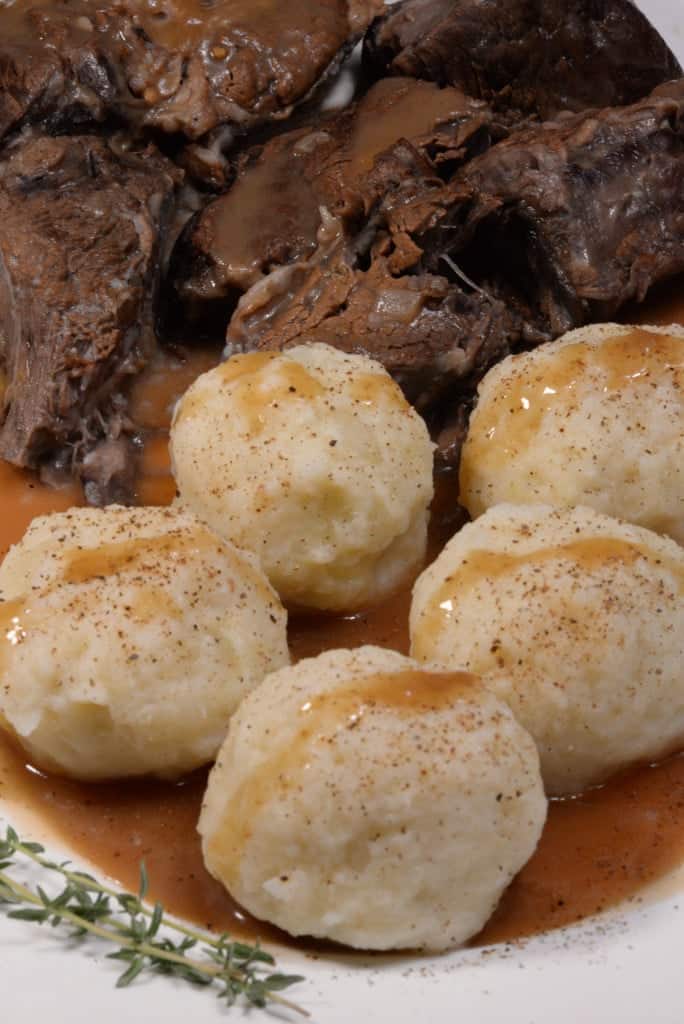
Kartoffelkloesse (German potato dumplings)
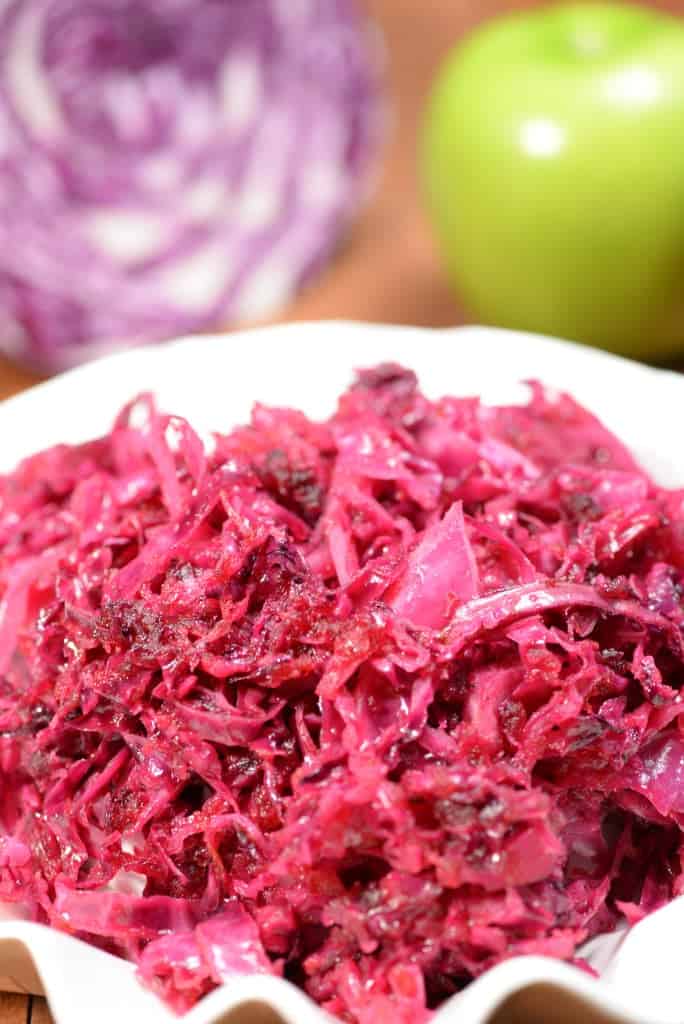
Rotkohl (German red cabbage)
Dessert
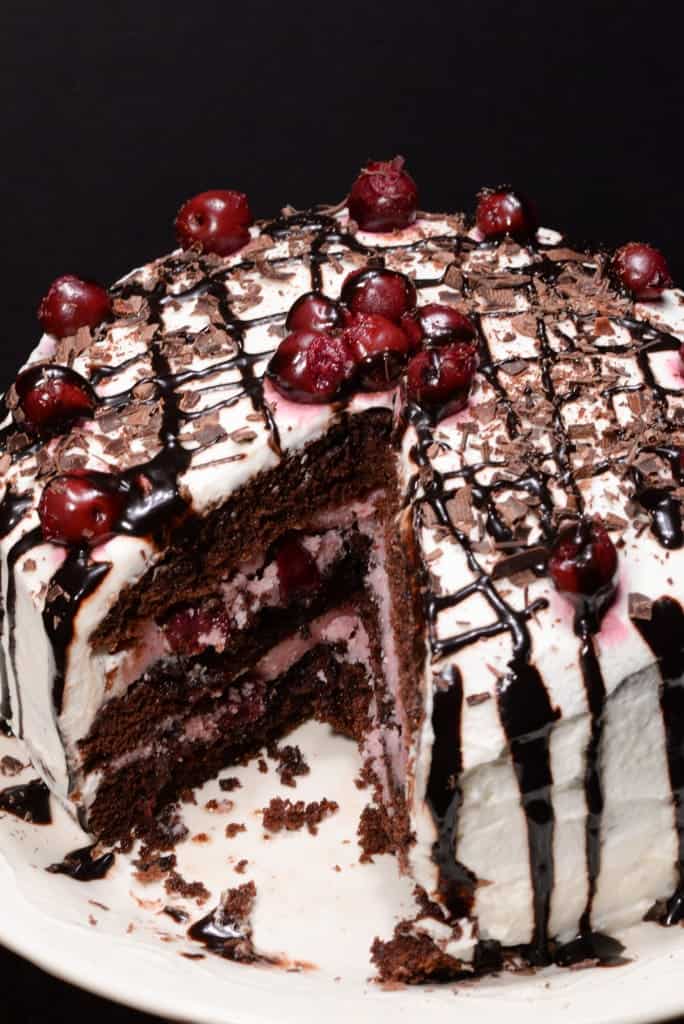
KirschKuchen (Black forest cake)
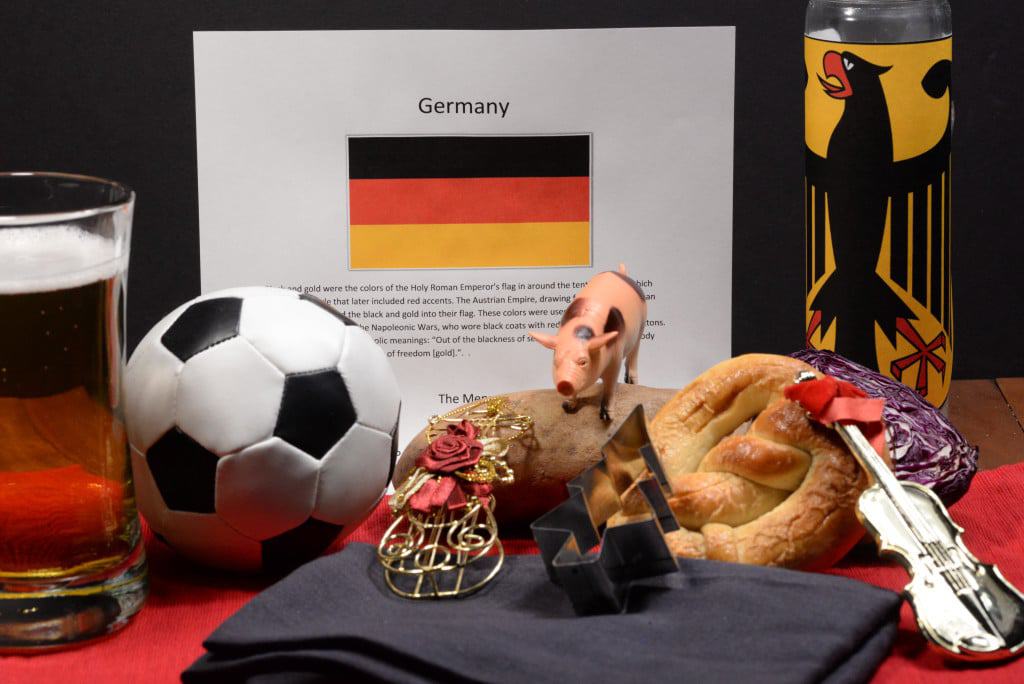
We set our table with colors of the German flag; red, black and gold. Our décor included various instruments to honor their musical genius. We added a Christmas tree cookie cutter, as they are responsible for the Tannenbaum tradition. A soccer ball was included for Germany’s most recent win in the World Cup. (They have more soccer fan clubs than anywhere else in the world.) I wanted to showcase the Angela Merkel, Barbie doll, but I could not locate one. She is the first woman Chancellor of Germany and head of the European Union. Forbes lists her as one of the most powerful people on the planet. She has been very popular in her country however recently she faces huge opposition with yet another proposed Greek bailout on the table. Lastly, the German coat of arms rounded out our décor.
We ate continental style, which is customary there, as we listened to a variety of classical music. For the first course, we lifted our beer steins and toasted “prost” which means “cheers” in German. It is considered rude to drink before toasting and when you clink your glass you should raise your elbow to shoulder height. Our first course was the famous German pretzel. This thick, doughy pretzel, hot from the oven, sprinkled with coarse salt and dipped in mustard is perfect with a good German beer. By the way, you should cut your pretzel with your knife and eat it with your fork. It is rare to see people eating with their hands in Germany.
We brought out the main course and said “Guten Appetiit” which means “Enjoy your meal.” We savored the delicious roasted meat called sauerbraten. This meat is so unbelievably tender after being marinated for days and then cooked, low and slow. The result is a lovely roast with an awesome gravy to go with it. It was served with outstanding, potato dumplings that curiously are made with a homemade crouton inside. Although the crouton was also delicious, I wasn’t really sure why it was added to the dumpling. It was awesome by itself, especially dipped in the gravy from the sauerbraten. It is important to note, that when eating in Germany, you should only cut off one piece of meat at a time, and be sure to clean your plate. So you should only take what you think you will really eat.
For a side dish we served boiled, red cabbage. It was perfectly cooked, so that it still had a slight crunch to it and the flavor of apple, which was cooked with it, made a lovely combination.
For dessert, we feasted on black forest cake! This cake is nothing like the black forest cake you normally find at your local bakery. In other words, it is not made with a cherry pie filling. Traditionally the cake is made with a cherry brandy found in the Black Forest region. I made ours using Morello cherries, that are also from the region but do not include the alcohol. The result was a keeper; a moist and most delectable cake and the perfect way to end our German meal.
As we say goodbye to Germany, we do so with a better understanding of what the German people have endured. Sometimes it is said that Germans come across as unfriendly but that is furthest from the truth. They are simply up-front and hard-working people. Time is managed carefully and punctuality is very important. Perhaps that is why they have one of the largest economies in the world.
Until next week
Warmest regards,
Darlene
That looks good. My kinda of food
Thanks Ellen, you should make it. It is pretty easy just takes a little time.